These days, buyers around the world are really rethinking how cake packaging holds up during long shipments, in humid warehouses, and behind busy bakery counters. When choosing a 2026 Best Corrugated Cake Board, don’t just pick it based on looks. It’s important to look closely at things like the flute structure, paper strength, surface coating, edge finishing, and whether it’s food-contact safe. Sometimes, a board might seem super sturdy on display, but then bend under the weight of a heavy wedding cake—you know, that little difference can really matter.
In real-world shopping, moisture resistance can be a total game-changer. For example, a 12-inch cake board stored near a chilled display might get condensation on it right before delivery. Big names like WestRock, Huhtamaki, and Graphic Packaging International have solid expertise in packaging, but at the end of the day, how a product performs depends a lot on its specs and testing. It’s a smart move to ask for caliper data, load tests, material declarations, and sample approvals before pulling the trigger on large orders.
Little details matter here: a smooth laminated surface can really up the presentation game, while rough edges might make handling trickier and affect how confident your customers feel. Using recycled fiber? That’s a plus for sustainability goals, but don’t just assume it’s automatically stronger or safer—things get a lot more nuanced than that, and comparing products can often seem way too simple.
A reliable Corrugated Cake Board needs to strike a careful balance—offering good protection, food safety, affordability, excellent print quality, and compatibility with regional shipping conditions. It’s a good idea to test in actual conditions—think stacking, refrigeration, vibrations—since things can change once it’s out in the real world. Some suppliers throw around impressive claims but don’t explain how they tested their products—that’s a red flag. Sometimes, the cheapest option isn’t the best, and thicker isn’t always better either. Buyers from around the globe should look for solid evidence, clear communication, and a readiness to question assumptions. Remember, even the most experienced teams can overlook humidity issues sometimes—that’s just part of the game.
What Defines a Corrugated Cake Board? Flutes, Liners, and Food-Contact Layers
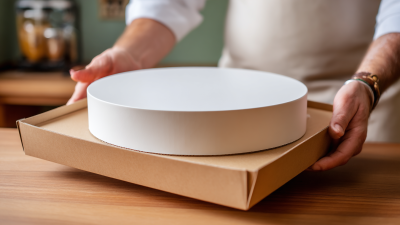
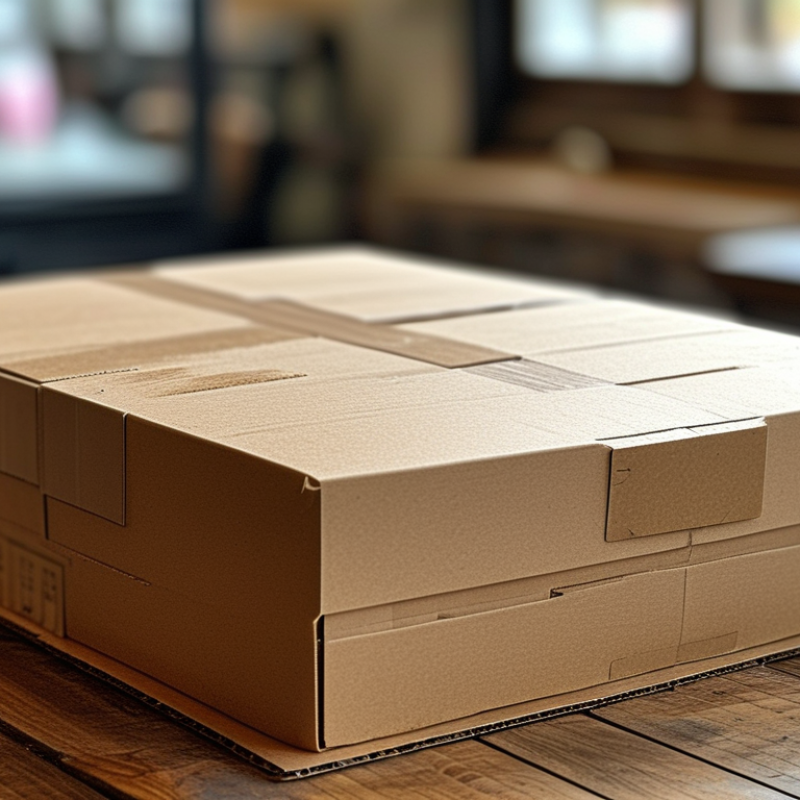
A corrugated cake board is more than a thick-looking base. Its performance depends on flutes, liners, and the food-contact layers between them. During packaging trials, I have seen a lightweight board support a tall cake well, while another warped after refrigeration.
Flutes create the board’s internal structure. Smaller flutes usually offer a smoother surface and better print definition. Larger flutes can improve cushioning and vertical strength.
Linerscover the flute tips and help distribute pressure across the Cake Base. Their paper weight, stiffness, and moisture resistance matter during transport.
A food-contact layer should separate the cake from recycled fibers, inks, adhesives, or other unsuitable materials. Buyers should request material specifications and food-contact documentation for the destination market. “Food safe” should not remain an unsupported claim.
Tips: Press the board lightly at several points. Uneven flex may indicate weak bonding or poor moisture control. Place a chilled cake on a sample board for several hours. Check for softening, odor, surface peeling, or grease marks. Measure the board after testing. Small changes can reveal hidden problems.
No board is perfect. I still question samples that perform well in dry rooms but fail near condensation. Global buyers should compare flute structure, liner quality, edge finish, and barrier performance together. A reliable board feels rigid, stays flat, and keeps the cake surface clean from production to display.
How ECT Ratings Compare: 32, 44, and 48 ECT Under ISO 3037
2026 Best Corrugated Cake Board for Global Buyers?
How ECT Ratings Compare: 32, 44, and 48 ECT Under ISO 3037
For global cake-board buyers, ECT is a useful starting point, not the entire specification. ISO 3037 evaluates edgewise crush resistance, usually on an unwaxed edge. The result shows how much vertical compression corrugated board can withstand before collapsing. In common US ratings, 32 ECT equals about 5.60 kN/m, 44 ECT about 7.70 kN/m, and 48 ECT about 8.41 kN/m. Higher numbers generally support heavier stacked cartons. However, laboratory values can change with moisture, flute design, liner quality, and test direction.
A 32 ECT board may suit light cakes and short-distance handling. A 44 ECT grade offers a stronger balance for larger cakes or export cartons. A 48 ECT option provides more crush resistance, but it may add cost and stiffness without solving every problem. Grease, humidity, and refrigeration can weaken paper fibers. A thick-looking board is not always a stronger board. I have seen specifications that looked impressive but lacked test conditions, sample direction, or moisture details. That gap deserves attention.
Tips: Ask for the ISO 3037 test report, board basis weight, flute profile, and moisture conditioning method. Confirm whether the quoted ECT value applies to the finished cake board. Test a packed sample under real stacking pressure. Also inspect edge damage after shipping. That small check can change the purchasing decision.
Which Flute Profile Fits Cakes? E, B, and EB at Approximately 1.5–7 mm
For global cake buyers, flute profile affects stiffness, presentation, and transport stability. E flute is usually about 1.5 mm thick, with a fine, compact structure. It creates a smoother surface for printing and suits cupcakes, pastries, and smaller cakes. However, its slim profile offers less cushioning against rough handling.
B flute commonly measures around 3 mm. It provides stronger support for medium cakes, especially when the board travels through delivery routes. The surface feels slightly more textured, but it handles compression better than E flute.
For heavier cakes, EB flute can offer greater rigidity, often ranging from approximately 4.5 to 7 mm, depending on the paper combination and production method.
In practical packing trials, I check deflection under the cake’s weight, edge crushing, and moisture resistance after refrigeration. A thick board is not automatically better. An EB board may look secure, yet its extra height can affect box clearance and increase material use. E flute may look elegant, but it can bend when a tall cake shifts during lifting. Board dimensions, paper strength, coating, and flute direction also change performance. I have seen specifications appear convincing until a chilled cake exposed weak edges. Buyers should request samples, measure thickness, and repeat tests with their actual cake weight, box size, and delivery conditions.
How Moisture Affects Boards: Cobb Testing at 60 Seconds Under ISO 535
2026 Best Corrugated Cake Board for Global Buyers?
Moisture can quietly weaken a Corrugated Board Cake Drum before it reaches the customer. The 60-second Cobb test measures water absorption in grams per square metre. ISO 535:2014 defines this method for paper and board testing. Lower values usually indicate better moisture resistance, but performance depends on board structure and coating.
A practical testing range is useful. Industry packaging laboratories often report uncoated kraft liners near 50–120 g/m² after 60 seconds. Coated surfaces may perform below 30 g/m² under similar conditions. These figures are reference ranges, not universal limits. TAPPI T 441 also uses the Cobb method, supporting comparison between laboratories. Results still change with temperature, paper grain, and sample conditioning.
Test the top surface separately.
During production checks, place a dry cake board on the tester, add 100 millilitres of water, and start the timer immediately. After 60 seconds, remove the water and weigh the absorbed moisture. A board that looks rigid may still absorb water rapidly along exposed edges. That detail is easy to miss. Real cakes also create condensation inside closed packaging, especially during refrigerated transport. Buyers should request test reports showing sample thickness, conditioning, coating type, and Cobb value. ISO 187 recommends controlled paper conditioning, commonly at 23°C and 50% relative humidity. Some suppliers omit this information. That weakens confidence.
2026 Best Corrugated Cake Board for Global Buyers?
How Moisture Affects Boards: Cobb Testing at 60 Seconds Under ISO 535
The chart compares water absorption measured by the Cobb60 method, expressed in grams per square metre (g/m²). Lower Cobb60 values indicate better resistance to moisture during a 60-second water exposure. The test uses a defined test area, water contact time, and gravimetric calculation in accordance with ISO 535. Actual performance can vary with coating, paper structure, adhesive, storage humidity, and edge exposure.
Which Food-Contact Rules Apply? FDA 21 CFR 176.170 and EU 1935/2004
For global buyers, the 2026 best Disposable Corrugated Cake Board is not simply the thickest or brightest option. Food-contact compliance matters more than appearance. In the United States, FDA 21 CFR 176.170covers paper and paperboard used with aqueous and fatty foods. Its requirements depend on the food type, contact time, temperature, and intended use. A cake board touching buttercream needs different evidence than one supporting a sealed Cake Box.
Ask suppliers for a current declaration of compliance, material specifications, and migration test results. Check the paper fibers, coatings, inks, adhesives, and recycled content. Each layer can affect food safety. Test reports should match the actual board structure, not a similar sample. Lot numbers and production records also help trace problems when moisture stains appear beneath a cake.
The European Union follows a different framework. Regulation (EC) No 1935/2004 requires food-contact materials to avoid harmful migration, unacceptable composition changes, or taste and odor transfer. Paper products must also follow applicable national measures and good manufacturing practice requirements. “Food grade” alone is weak evidence. It is a purchasing shortcut, not proof. One practical weakness is that buyers sometimes check only the finished board. I would also review storage conditions, because humidity can soften corrugation and change contact behavior. Some details remain easy to miss. Ask for clarification when test conditions do not resemble real bakery use.
How Do FSC Certification and Recycled Content Affect Global Sourcing?
For a Corrugated Cake Box, FSC certification and recycled content answer different sourcing questions. FSC’s 2024 facts and figures report covers more than 160 million hectares of certified forests across nearly 90 countries. It supports traceability from forest or recovered material through certified suppliers. However, FSC certification does not automatically mean the board contains recycled fiber. Buyers should request the certificate scope and chain-of-custody claim.
Recycled content can reduce dependence on virgin pulp, but quality varies by mill and region. The Confederation of European Paper Industries reported a 79.3% paper recycling rate in Europe in 2023. Recovered fibers may become shorter after repeated processing. That can affect compression strength, moisture resistance, and clean folding around a round cake. Small details matter.
Ask suppliers for the recycled-content percentage, fiber source, basis weight, and edge-crush results. For food-contact use, request current compliance documents for the destination market. FSC status alone is not enough. A supplier may offer FSC-certified board with low recycled content, or recycled board without FSC certification. Both can be legitimate choices, depending on the buyer’s claim and risk controls. The awkward part is that “eco-friendly” often remains too vague. It needs paperwork, not a green sentence. Test samples after refrigeration, stacking, and humid transit. That is where attractive specifications sometimes fail.
How Should Buyers Score Strength, Safety, Cost, and Recyclability in 2026?
Global buyers should score a corrugated cake board by performance, not appearance. Strength comes first. Ask for edge crush test results, compression data, and moisture resistance. A 3-millimeter board may bend under a heavy, chilled cake. A stronger board keeps the base flat during delivery and stacking.
Safety requires documented food-contact compliance for each destination. Suppliers should provide migration test results, ink details, and material declarations. Requirements differ between markets. Do not accept vague claims. For a Cake Box Corrugated insert, uncoated paper and controlled adhesives usually simplify assessment. Still, recycled fiber needs careful screening for contaminants.
Cost deserves a broader calculation. Compare board weight, defect rates, freight volume, and replacement claims. The cheapest sheet can become expensive after one collapsed cake. Recyclability also needs evidence. The American Forest & Paper Association reported a 69% U.S. corrugated recovery rate in 2023. CEPI reported a 79.3% European paper recycling rate for 2022. These figures depend on clean collection systems. Wax coatings, plastic films, heavy laminates, and food residue can reduce recovery.
My practical score would assign 35% to strength, 25% to safety, 20% to cost, and 20% to recyclability. This weighting is imperfect. A premium wedding cake may need a different balance. Buyers should test a loaded board after refrigeration, transport vibration, and two hours at room temperature. Measure deflection, edge damage, odor, and surface staining. Request samples from the same production lot. One sample proves very little.
A Complete Guide to Colorful Round Cardboard Cake Boards for Bakeries from China Suppliers
A Complete Guide to Colorful Round Cardboard Cake Boards for Bakeries from China Suppliers begins with choosing the right balance of strength, appearance, and production flexibility. According to Grand View Research, the global Paper Packaging market was valued at more than USD 400 billion in 2022 and is projected to continue expanding through 2030, reflecting growing demand for practical, recyclable packaging formats. For bakeries, durable round cardboard boards provide stable support for cakes, pastries, and desserts while helping protect products during handling, transport, and display.
China suppliers can offer colorful cake boards in a broad selection of diameters, thicknesses, and finishes, making it easier to match seasonal themes, premium collections, or everyday bakery designs. Flexible sizing is particularly useful for businesses managing multiple cake formats, while color choices can strengthen visual presentation without requiring complex packaging. Future Market Insights also identifies food packaging customization and convenience as important growth factors, reinforcing the value of adaptable Bakery Packaging.
When evaluating a factory, buyers should review cardboard density, moisture resistance, edge quality, load-bearing performance, and consistency between production batches. Food-contact suitability, clean cutting, secure stacking, and dependable lead times are equally important for professional bakery operations. A well-manufactured, colorful round cake board not only keeps baked goods intact but also creates a polished foundation that can enhance perceived product value from the display counter to final delivery.
FAQS
: E flute is about 1.5 millimeters thick. Its fine surface supports clean printing and neat presentation. It offers limited cushioning during rough handling.
B flute is usually around 3 millimeters thick. It supports medium cakes during delivery and stacking. Its surface feels slightly more textured. That may be acceptable.
EB flute can measure approximately 4.5 to 7 millimeters. It provides stronger rigidity for heavier cakes. However, extra height may reduce box clearance and increase material use.
No. Thickness alone does not prove performance. Board size, paper strength, coating, and flute direction also matter. Test the real board.
Place the actual cake on the board. Measure bending, edge crushing, and movement during lifting. Repeat the test after refrigeration and delivery vibration. A single sample proves very little.
Condensation can soften the board inside closed packaging. Exposed edges may absorb water faster than coated surfaces. A rigid-looking board can still fail near the edges.
It measures water absorption in grams per square metre. Lower results generally suggest better moisture resistance. Testing conditions can change results. Request the sample thickness and conditioning details.
Request migration results, ink information, adhesive details, and material declarations. Requirements differ between destinations. Recycled fibers need contaminant screening. Vague claims are not enough.
Compare board weight, freight space, defect rates, and replacement claims. A cheaper sheet may become expensive after one collapsed cake. Clean paper is usually easier to recover. Wax, plastic films, laminates, and food residue can reduce recyclability.
A practical starting point is 35% strength, 25% safety, 20% cost, and 20% recyclability. This weighting is imperfect. Wedding cakes may need different priorities. Measure deflection, odor, staining, and edge damage after testing.
Conclusion
Choosing the right Corrugated Cake Board in 2026 requires a balanced review of structure, food safety, performance, and sustainability. Buyers should understand how flute profiles such as E, B, and EB affect thickness, rigidity, cushioning, and presentation. ECT ratings, including 32, 44, and 48, provide useful guidance for compression strength when evaluated under ISO 3037, while Cobb testing at 60 seconds under ISO 535 helps assess resistance to moisture. The appropriate combination depends on cake weight, stacking conditions, transport distance, and humidity exposure.
Food-contact suitability is equally important. Materials and coatings should be evaluated against applicable requirements, including FDA 21 CFR 176.170 and EU Regulation 1935/2004, according to the target market and intended use. FSC certification and recycled content can support responsible sourcing, but buyers should also verify traceability, cleanliness, and consistent quality. A practical purchasing score should weigh strength, safety, cost, moisture resistance, recyclability, and supply reliability rather than focusing on price alone.
 +86-18394093613
 Contact Phone
 Contact Email