+86-18394093613
Honestly, finding the right transparent Cake Box manufacturer in China isn’t just about comparing prices or scrolling through glossy photos. If you run a bakery, you know the packaging has to do a lot: keep that delicate frosting intact, show off each layer, and be consistent in size every single time. You also want a supplier who can actually explain—plainly—what materials they use, how they make the boxes, what quality checks they do, and what customization options you have. That kind of clarity matters.
Start by looking at the actual samples—that’s where you get a real feel for things. Does the lid snap on securely? Do the corners hold their shape? And is the plastic still clear under the shop lights? These little things can tell you a lot. When you talk to suppliers, don’t be shy about digging into the details: material specs, food-contact documentation, how they print, minimum order quantities, lead times. If they have recent quality records, ask to see them. And make sure what they tell you actually lines up with what’s in the paperwork. That transparent box cake design? It can look absolutely stunning online. But here's the thing—if it gets scratched during shipping or slides around on the delivery tray, it might not perform nearly as well in real life.
Alright, so if you're trying to figure out which Chinese manufacturer actually deserves your business, this guide's for you. Instead of just trusting flashy "best supplier" badges or whatever, we'll walk through some practical criteria you can actually use. Things like product range, how they communicate, sample quality, customization options, and whether they can deliver reliably. And hey, we've got some questions you can ask before committing to a big order, too. Here's the thing though—no supplier is going to be perfect for every bakery out there. A small shop might care more about flexible quantities, while a growing chain probably needs consistent specs and dependable capacity. Different strokes, right? Look, even if you're super thorough, there's only so much a review can tell you—factory conditions and service can shift under your feet. So make sure to verify the important stuff yourself, and remember: judge the box by the cake it's supposed to protect.
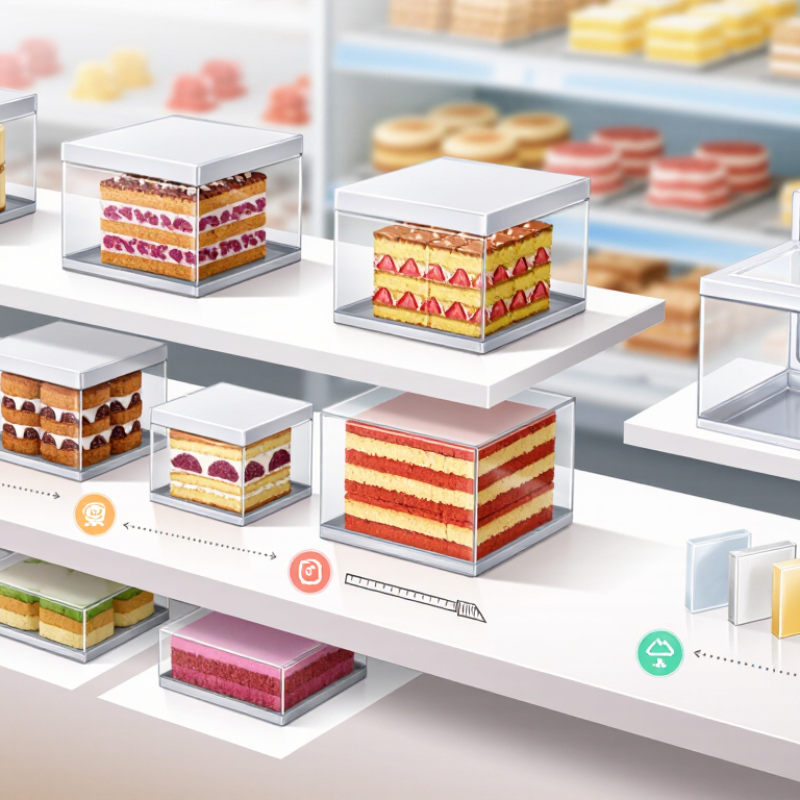
Choosing a reliable transparent cake-box maker takes more than comparing clear samples. A Cake Transparent Box should show the cake cleanly, without cloudy panels, sharp edges, or a lid that slips during carrying. Ask for material specifications and food-contact documentation, then check that the delivered box matches the sample. Details matter.
Five criteria set a useful benchmark: clarity and material quality; stable structure; documented food-contact suitability; accurate printing and sizing; and consistent production support. Test a filled box on a short walk. Does the base flex? Does the lid stay closed? Check the corners, too. A box that looks elegant on a display table may behave differently in a delivery bag.
Good makers explain tolerances, minimum order quantities, and how they handle defects. Request a sample with your cake’s actual height and weight, not just a standard display piece. Ask how print colors may shift on clear plastic. Small variations happen. Still, vague answers about specifications or quality checks deserve a second look. Price matters, but a low quote means little if lids arrive uneven or sizes change between batches. I would not judge a supplier from one perfect sample alone.
Who Makes the Best Transparent Cake Boxes in China?
Verify Food-Contact Safety Against GB 4806.7-2023
A Clear Cake Box should protect the dessert without creating uncertainty about food contact. For plastic boxes, ask suppliers for documentation showing compliance with GB 4806.7-2023, China’s food safety standard for plastic materials and articles that contact food. Check that the documents identify the actual material and product, not just a similar sample. A neat-looking certificate is not enough.
Tips: Request recent test reports and confirm the tested item matches the box you plan to buy. Check migration results under conditions relevant to cakes, including contact time and temperature. Keep batch records, too. They make follow-up easier if packaging changes.
A capable manufacturer should explain the resin used, provide traceable production details, and answer questions clearly. Inspect samples for sharp edges, cloudy patches, weak hinges, and lids that do not close evenly. These small details matter during packing and delivery. Still, inspection cannot replace proper testing. One detail is easy to miss: a box may be suitable for chilled cake service but not every storage condition. Ask for evidence that fits your intended use, and verify it before placing a large order.
For buyers comparing transparent Cake Boxes in China, PET, rPET, and PP solve different packaging problems. PET typically offers crisp visibility, keeping frosting edges, fruit layers, and colors easy to see. A well-designed lid feels firm, though thin walls may flex during stacking. Ask suppliers for actual sheet thickness and a filled-box sample, not just a product photo.
rPET can provide similar visual appeal, but clarity may vary with recycled content and processing. Slight haze or color shifts are possible; inspect samples under shop lighting. Recycled content may support material-reduction goals, but recyclability depends on local collection and sorting systems. A label alone cannot guarantee recycling. Clear, uncolored packaging may be easier to sort, but check local guidance.
PP is usually more flexible and less prone to cracking under pressure, which can help with hinged closures. Its clarity is often softer than PET, sometimes with a faint cloudy cast. Not ideal for every display. Test each material with a chilled cake inside: condensation can change its appearance, and a clear empty lid may fog in use. Check closure fit, corner strength, and food-contact documentation. Small details matter. There is no universal winner; cake weight, display lighting, transport distance, and local recycling options should guide the choice.
A strong transparent Cake Box should protect the cake without hiding its decoration. Check wall thickness at several points with a caliper, not just near the edge. Uneven panels can flex during carrying, even when the average thickness looks adequate.Cake Box Transparent samples should be compared using the same measurement method and box size. Small details matter.
Load capacity needs a practical test. Place a finished, weighted cake board inside, then lift the box by its intended carrying points. Watch for bowed walls, stressed corners, or a lid that starts to separate. Repeat the test on several units; one successful sample proves little. A simple test cannot predict every delivery condition, but it can reveal weak construction early.
Fit tolerance is just as important. Measure the cake board and the box’s usable interior, since outside dimensions may be misleading. Leave enough clearance to avoid scraping frosting, but not so much that the cake slides. Test lids for even closure and check whether small gaps appear at the corners. A snug fit is useful, though overly tight lids can deform during assembly. Recheck measurements across batches, because packaging dimensions may vary slightly.
A reliable Transparent Cake Box supplier should show how each production batch is controlled, not just present a polished sample. Ask whether cartons, sheets, and finished boxes carry batch codes that link materials to production dates. Traceability matters when a lid arrives cloudy or a corner splits during delivery. Can the factory identify the affected run quickly?
Review actual quality-control records, including checks for clarity, dimensions, locking tabs, and food-contact surfaces. Compare inspection frequency with production volume. Ask for recent defect rates and how they are calculated; a percentage without a defined sample size says little. One imperfect detail: even careful sampling can miss intermittent flaws, so records should include customer complaints and corrective actions, too.
Tips: Request a sample inspection sheet and one anonymized batch record. Check that dates, quantities, results, and corrective actions align. Ask how rejected boxes are separated from approved stock. A low defect rate sounds reassuring, but verify the period covered and whether rework is counted. If answers stay vague, pause. Clear records make supplier comparisons more useful than attractive photos alone.
A useful answer to “Who makes the best transparent Cake Boxes in China?” starts with a supplier scorecard, not a glossy catalogue. Rank factories by verified MOQ, quoted lead time, customization range, and export readiness. Smithers’ The Future of Global Packaging to 2028 estimates the worldwide packaging market reached about US$1.17 trillion in 2023. That scale makes packaging expertise valuable, but it does not prove any single factory is dependable. Request a dated quotation, production schedule, and sample before comparing offers. A low MOQ can suit a new bakery; a stable reorder schedule matters more at scale.
For customization, check whether the supplier can adjust box dimensions, window clarity, inserts, and printing without weakening the folds. Ask to inspect a sample with a real cake inside: corners should stay square, and the lid should close without rubbing the frosting. For export readiness, request material specifications, packing details, and applicable food-contact documentation for the destination market. Confirm who handles export documents and whether the quoted lead time includes sample approval and transit. “Cup Cake Box Transparent” searches may surface many options; clear photos alone are weak evidence. My own caution: supplier claims are easy to compare, but actual batch consistency takes repeat orders to judge.
Tips: Ask for MOQ and lead time in writing. Test one sample. Check carton dimensions and stacking strength before approving a bulk order.
Comparison of common supplier profiles for transparent Cake Boxes. Rankings are indicative and reflect typical sourcing trade-offs, not verified performance claims about specific factories.
| Rank | Supplier Profile | Typical MOQ | Typical Lead Time | Customization | Export Readiness | Best Fit | Overall Assessment |
|---|---|---|---|---|---|---|---|
| 1 | Established packaging manufacturer with export experience | About 2,000–5,000 pieces for custom orders; stock items may be available in smaller lots | Approximately 20–35 days for customized production; shipping time is additional | High: sizes, PET or PVC material options, printing, inserts, and packaging configurations; confirm food-contact suitability for the intended market | High potential: may support export packing, commercial documents, and product specifications; request evidence and samples | Importers seeking a balance of customization, repeatability, and export coordination | Best overall balance |
| 2 | Stock-focused packaging supplier | About 500–1,000 pieces, depending on available stock and carton quantities | Often 7–15 days for available stock; replenishment may take longer | Low to medium: standard sizes are easiest; labels or simple printing may be possible | Medium: export capability varies; confirm carton markings, documentation, and packing standards before ordering | Small businesses, sample orders, and buyers testing demand | Best for low MOQ and speed |
| 3 | Custom-print packaging converter | About 3,000–5,000 pieces for printed designs; minimums depend on print method and artwork | Approximately 20–35 days after artwork approval and sample confirmation | High for graphics, logos, colors, and finishes; structural changes may require separate tooling | Medium to high: assess export packing and documentation separately from printing capability | Brands needing consistent printed presentation across product lines | Best for branded designs |
| 4 | Specialist custom-structure producer | About 5,000–10,000 pieces when new tooling or a non-standard structure is required | Approximately 30–45 days, including sample development and production; tooling can add time | Very high: custom dimensions, closures, inserts, and structural designs, subject to material and tooling limits | Variable: request prior export references, packaging details, and destination-market compliance documents | Large-volume buyers with distinctive box designs or specific fit requirements | Best for complex customization |
| 5 | Trading and sourcing company with multi-factory access | About 1,000–3,000 pieces, depending on the selected factory and combined order volume | Approximately 20–40 days; timing depends on factory allocation and order coordination | Medium to high: options may span several factories, but design control varies | Potentially high for buyer communication and consolidation; verify who manufactures the goods and who issues documents | Buyers needing help comparing specifications or consolidating packaging orders | Best for sourcing support |
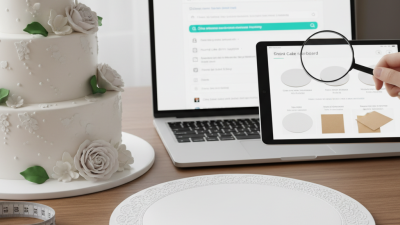
Custom professional-grade round cardboard cake boards combine dependable support with a polished finish, helping cakes travel securely and look their best on display. Made by experienced suppliers and factories in China, these boards use quality cardboard selected for strength and a neat, consistent surface. They are suitable for bakeries, cake decorators, event planners, and home bakers who want a reliable base for everyday creations or special-occasion desserts.
A broad range of standard sizes is available, from 3 to 20 inches, with equivalent metric sizes offered to suit different cake dimensions. Custom sizing can also be arranged for unusual designs or specific presentation needs. Choose classic gold or silver metallic finishes for an elegant look, or request personalized colors such as pink and blue. For a distinctive presentation, custom shapes—including hearts and hexagons—can be made to complement themed cakes and celebrations.
These boards are designed to balance practical durability with attractive presentation. Their firm construction helps support decorated cakes, while the choice of colors, finishes, sizes, and shapes gives buyers greater flexibility when planning a product range or a one-of-a-kind order. By discussing specifications with a supplier, customers can select cake boards that match their baking, packaging, and display requirements.
Look for clear panels, smooth edges, and a lid that stays closed. Put in a cake of the real height and weight. Then carry it briefly.
Check whether the base flexes and the corners stay square. See if the lid rubs the frosting. A display-table test alone can mislead.
Request material specifications and relevant food-contact documentation for your destination market. Keep the documents with the order records.
Ask for inspection records covering clarity, dimensions, locking tabs, and food-contact surfaces. Request a recent batch record, too. Dates and results should match.
Batch codes can link finished boxes to materials and production dates. They help identify an affected run if lids turn cloudy or corners split. Useful, not perfect.
Compare written minimum order quantities, lead times, customization options, and export support. Check whether quoted timing includes sample approval and transit.
Ask for a sample with your requested dimensions and printing. Colors may shift on clear plastic. Small changes happen, but confirm them before bulk production.
Not always. Compare the price with sample quality, defect records, and batch consistency. I might still trust one polished sample too much; repeat orders reveal more.
Choosing the best Transparent Cake Box maker in China requires more than comparing prices or appearance. Buyers should first confirm that materials intended for food contact meet the relevant requirements of GB 4806.7-2023. They can then compare PET, rPET, and PP based on clarity, rigidity, and recyclability, selecting a material that suits the product and packaging needs. Practical quality checks should include wall thickness, load capacity, and fit tolerance to help ensure boxes protect cakes and close securely.
A reliable supplier should also maintain clear factory controls, including batch traceability, documented quality inspections, and consistent defect monitoring. Finally, compare manufacturers by minimum order quantity, production lead time, customization options, and export readiness. Reviewing these criteria together offers a balanced way to assess suppliers and identify one that can deliver dependable quality, suitable packaging, and workable production terms.