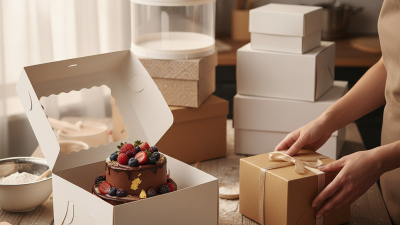
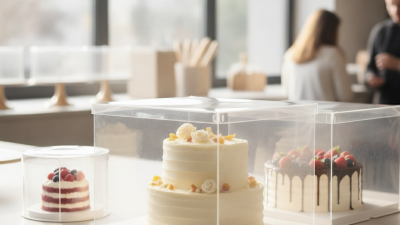
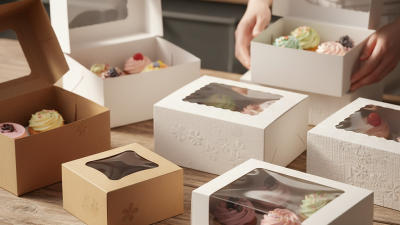
Bakery demand is climbing around the world, and presentation? It's now a big part of why people buy. Grand View Research put the global bakery products market at about USD 588.8 billion in 2024, and it expects a 5.4% compound annual growth rate from 2025 to 2030. For dependable Transparent Cake Box suppliers, numbers like these mean real, practical opportunity.
A Clear Box does two things at once: it protects the decoration and keeps the cake visible. That visibility really matters—on retail shelves, at delivery counters, and in online product photos. But looking good isn't the same as being good. A suitable Transparent Cake Box should have a stable structure, clean folding lines, secure locking, and reliable food-contact documentation. It also needs to hold up against moisture from cream, fruit, and refrigerated storage.
Smithers' packaging research points to material efficiency and recyclability as key market priorities. That shift affects cake packaging buyers, even when customers still want strong transparency. Sander Defruyt, a plastics policy specialist at the Ellen MacArthur Foundation, put it bluntly: “We cannot recycle our way out of the plastic pollution crisis.” That warning is worth sitting with.
A beautiful box can still waste material. Simple as that.
So responsible suppliers should explain polymer selection, thickness, printing inks, and end-of-life options. They should offer samples before large production. They should also support batch inspection and consistent carton dimensions. Those steps cut down on crushed corners, loose lids, and unnecessary returns.
China is still a major packaging manufacturing base, with flexible tooling and scalable production. But low price alone isn't enough. Buyers need traceable specifications, honest lead times, and evidence of quality control. The phrase Transparent Box Cake may show up in search data, but professional sourcing needs clearer technical language. A supplier's real value shows up after repeated shipments—not after one attractive sample.
China’s Transparent Cake Box Industry: Definition and Market Role
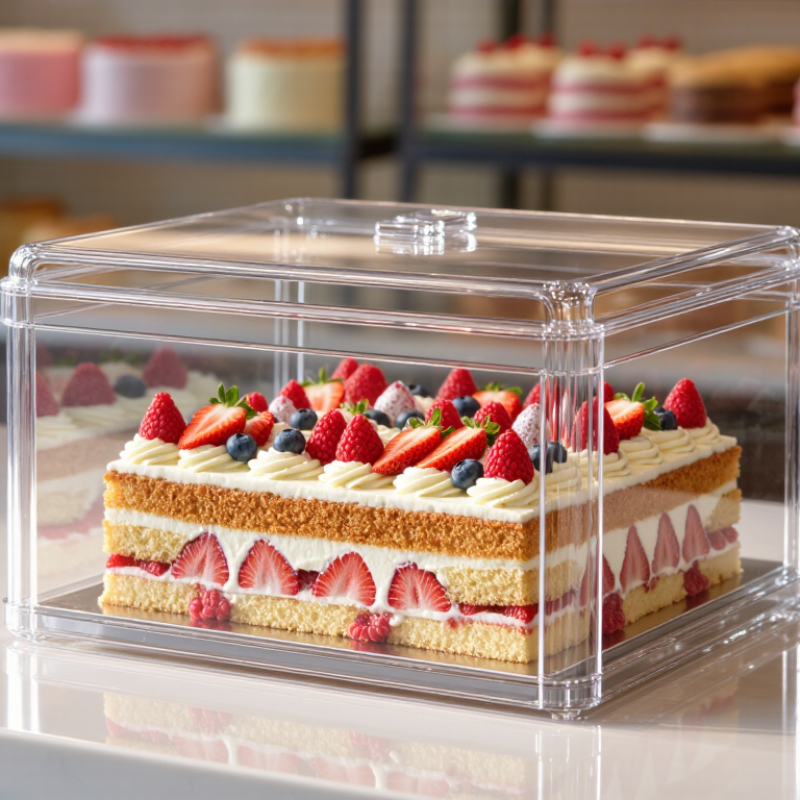
China’s transparent Cake Box industry covers the design, production, and export of clear packaging for cakes and pastries. These boxes usually use food-contact plastic, paperboard bases, or recyclable materials. Their transparent structure protects decoration while displaying the product clearly. In practice, box performance depends on rigidity, clarity, closure strength, and moisture resistance. A beautiful box is not useful if its lid opens during delivery.
The industry plays an important role in China’s Bakery Packaging market. Manufacturers support bakeries, distributors, retailers, and global buyers with various sizes and structures. Standard boxes offer stable production and faster delivery. Custom options can match cake height, base shape, window size, and transport needs. However, customization may increase tooling costs and inspection time. This trade-off deserves careful review before ordering. Reliable suppliers should provide material details, sample checks, production photos, and consistent packing records.
Tips: Test the box with a real cake before bulk production. Check the lid after refrigeration and short-distance transport. Confirm dimensions in millimeters, not general descriptions. Ask for food-contact documentation and export packaging details. Small gaps can cause movement. Excessive clarity can also reveal scratches, fingerprints, or uneven edges. Global buyers should compare more than price, because factory communication, quality control, and shipping protection affect the final customer experience.
Key Materials Used in Transparent Cake Box Manufacturing
China Top Transparent Cake Box Supplier for Global Buyers
When selecting a transparent Cake Box, material choice affectsvisibility, strength, food safety, and shipping performance. Food-grade PET is widely used because it offers clear walls and reliable rigidity. It also resists moisture from chilled cakes and cream decorations. For heavier products, a PET lid with a paperboard base can improve stability. The base absorbs less impact than thin plastic alone. However, paperboard needs a suitable coating and food-contact documentation. Recycled PET can reduce material demand, but its clarity may vary between batches. That trade-off deserves honest testing.
Tips: Ask suppliers for resin specifications, migration test reports, thickness data, and production samples. Check the box after refrigeration, stacking, and a short delivery simulation. A clear sample may still crack at folded corners. Inspect hinges, locking tabs, and ventilation gaps by hand. Do not judge quality from appearance alone.
Responsible manufacturers control raw materials, forming temperature, and trimming accuracy. They should explain tolerances, minimum order quantities, and replacement procedures. Polypropylene may suit flexible lids, but it usually provides less visual clarity than PET. Inconsistent thickness can create cloudy areas or weak edges. I have seen attractive samples fail when stacked in warm conditions. That mistake is easy to overlook. A dependable supplier provides traceable batch records and practical packaging advice. The best material is not always the clearest one. It must protect the cake from pressure, moisture, and handling throughout delivery.
How Chinese Suppliers Design and Produce Cake Boxes
China Top Transparent Cake Box Supplier for Global Buyers
Chinese suppliers design a Cake Transparent Boxaround product protection, visibility, and shipping efficiency. The process often begins with cake dimensions, board thickness, and stacking conditions. Designers create a dieline before making a steel or aluminum mould. PET is common because it is clear, lightweight, and widely available for Food Packaging. Some suppliers also test rPET content, although clarity can decline slightly. The first sample is rarely perfect.
Production teams usually run trial batches before mass manufacturing. They check folding accuracy, lid fit, edge strength, and surface scratches. A practical factory may place a finished box under moderate compression for several hours. Drop tests simulate courier handling. Humidity tests matter too, especially for chilled cakes and coastal delivery routes. Small details matter.
Smithers reported that the global packaging market exceeded one trillion US dollars in 2023 and is expected to keep expanding through 2028. Its analysis highlights material efficiency and recyclable formats as important development factors. The PMMI packaging report also identifies automation, waste reduction, and flexible production as major industry priorities. Chinese suppliers respond with automated cutting, controlled heat forming, and camera inspection. Yet not every production line performs equally well. Buyers should request food-contact documents, material declarations, batch records, and pre-shipment samples. Clear documentation is useful. A beautiful box can still fail if its hinge cracks during delivery.
Quality Standards for Global Transparent Cake Box Buyers
China Top Transparent Cake Box Supplier for Global Buyers
A Cake Box Transparent package should protect decoration, not merely display it. Clear food-contact material must be tested for migration, odor, and surface cleanliness. Buyers should request current test reports, material specifications, and batch records before placing regular orders. A glossy lid alone proves little.
Clarity matters. Fit matters more.
During sample approval, check lid alignment, locking strength, corner pressure, and base stability. Place a decorated cake inside, then move the box carefully across a refrigerated surface. Watch for fogging, cracks, loose tabs, or cream touching the lid. We have found that a box can look excellent on a sample table yet fail during stacking. That gap deserves attention.
Dimensions should match the cake closely, leaving safe clearance for frosting and toppings. Ventilation needs careful review because too many openings may weaken protection. Suppliers should control sheet thickness, cutting accuracy, folding consistency, and printing safety where applicable. A drop test and stacking test can reveal weak corners quickly. Documentation should remain traceable by production batch.
Global buyers also need packaging that suits local food-contact requirements and transport conditions. Humidity, temperature changes, and long-distance handling may affect stiffness and visibility. Some assumptions will be wrong. Rechecking them is part of responsible purchasing. A reliable supplier explains limits honestly, keeps inspection samples, and corrects defects instead of hiding them.
Customization Options for Transparent Cake Box Packaging
A Transparent Cake Box should protect the dessert and sell its appearance. Custom dimensions can fit a six-inch cake, tall mousse, or layered pastry without wasted space. Clear PET offers strong visibility, while rPET can support recycled-content goals when food-contact requirements are met. The choice needs testing.
Smithers’ report, The Future of Sustainable Packaging to 2028, identifies recyclable structures and material reduction as major packaging priorities. McKinsey’s global consumer research found that 60–70% of consumers may pay more for sustainable packaging. This supports lightweight designs, but transparency must not weaken protection. A thin lid can crack during delivery. That is easy to overlook.
Customization can include hinged or separate lids, locking tabs, ventilation openings, inner boards, handles, and seasonal printing. A 1–2 millimeter fit adjustment may prevent cream smearing against the lid. Small details matter. For export orders, suppliers should verify food-contact documentation, compression strength, drop performance, and carton loading efficiency. I have seen attractive prototypes fail because the corner tabs opened under pressure. The better process uses a real cake, a simulated transport route, and repeated trials. Perfection is not guaranteed. Packaging teams should record failures, revise the structure, and retest before mass production.
How to Evaluate and Select a China-Based Supplier
China Top Transparent Cake Box Supplier for Global Buyers
Selecting a China-based supplier requires more than comparing prices. According to Smithers’ The Future of Global Packaging to 2028, worldwide packaging demand is expected to exceed US$1.2 trillion by 2028. This growth increases supplier choices, but also increases quality risks. Ask for factory photos, production records, food-contact declarations, and recent inspection reports. A reliable supplier should explain whether the box uses PET, PP, or another material. The plastic should remain clear, odor-free, and stable after contact with cream and fruit. Request samples of the Cup Cake Box Transparent design before approving bulk production.
Check practical details closely. Measure lid fit, hinge strength, stacking height, and the base’s resistance to bending. A 2023 PMMI packaging trends report highlights sustainability and supply-chain efficiency as major purchasing concerns. Therefore, ask about recycled content, carton optimization, and export packaging. However, recycled material may not suit every food-contact application. Verify its approval for the destination market.
Do not accept vague certificates. Confirm the issuing body, test date, material grade, and product scope. Also compare minimum order quantities, mold charges, lead times, and replacement policies. A low quote can still be a warning.
My own evaluation would include a small trial shipment, because photographs cannot reveal crushed corners or condensation problems. Suppliers may answer quickly, yet inconsistent measurements deserve a second inspection. Perfect communication is not proof of perfect production.
International Ordering, Shipping, and Compliance Considerations
Global buyers need more than a clear sample from a transparent Cake Box supplier. International ordering begins with measurable specifications. Confirm box length, width, height, wall thickness, closure style, and stack strength. Request a material declaration for PET, PP, or another approved food-contact plastic. Ask for migration-test records that match the destination market. Requirements differ. Do not rely on a generic certificate.
An accurate pro forma invoice should show unit price, tooling, minimum order quantity, HS classification, and payment terms. Clarify whether pricing uses FOB, CIF, or another Incoterm. Small wording changes can shift freight responsibility. Shipping needs equal attention. Transparent boxes scratch easily, especially when separators are missing. Use protective film, nested packing, corner guards, and moisture-resistant cartons. Ask for carton dimensions, gross weight, pallet count, and loading photos.
A pre-shipment sample is useful, but it cannot prove every production batch. That assumption deserves criticism. Inspect random cartons before dispatch when order value is significant. Keep photos, inspection notes, and approved samples together. Customs clearance may require commercial invoices, packing lists, origin information, and product declarations. Confirm local requirements with a qualified customs professional. Supplier reliability also shows through traceable batch records, consistent measurements, and quick responses to nonconformities. A slightly cheaper box can create higher costs through breakage, delays, or rejected documentation.
China Transparent Cake Box Supplier: International Shipping Planning
Indicative ocean-freight transit times from China to major global buying regions. Actual delivery schedules vary by port, carrier, customs clearance, season, and Incoterms.
For international orders, buyers should confirm packaging specifications, commercial invoices, packing lists, HS classification, import duties, food-contact requirements where applicable, and destination-country labeling rules before shipment.
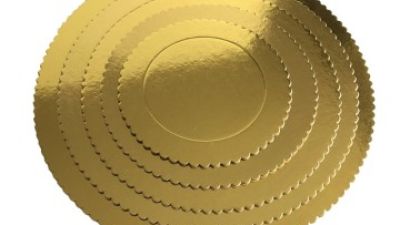
Vibrant Round Cupcake & Cake Stands: Stylish, Greaseproof Serving Boards for Every Party
Vibrant round cupcake and cake stands bring color, structure, and convenience to dessert presentation. The global Food Packaging market is projected to expand at an annual rate of approximately 5% through the decade, according to *Mordor Intelligence’s Food Packaging Market—Growth, Trends, and Forecasts* report. This growth reflects increasing demand for packaging that protects food while improving its visual appeal, particularly in bakeries, catering services, online dessert businesses, and event planning.
Made from food-grade cardboard, these round serving boards offer a practical foundation for cupcakes, cakes, pastries, and snacks. Their grease-resistant surface helps prevent oil and moisture from affecting the board, supporting cleaner handling and more attractive displays. The lightweight construction also simplifies transport and storage, while the vibrant finish helps dessert tables stand out at birthdays, weddings, holiday markets, and everyday bakery counters. Food-contact packaging remains a key focus in the bakery sector, where hygiene, product protection, and presentation influence purchasing decisions, as highlighted in *Future Market Insights’ Bakery Packaging Market Outlook 2024–2034*.
Manufactured with 15 years of production experience, each stand is made under controlled processes with food-grade certification requirements in mind. Flexible customization allows buyers to specify dimensions, colors, shapes, and printed presentation details to match different products or event themes, supporting both small specialty orders and larger wholesale programs.
FAQS
Designers begin with cake size, board thickness, frosting height, and stacking conditions. They create a dieline before making a forming mould. The first sample is rarely perfect.
PET is common because it is clear, lightweight, and widely available. Some suppliers test recycled content, but clarity may decline slightly.
They check folding accuracy, lid fit, edge strength, and surface scratches. Drop tests imitate courier handling. Compression tests reveal weak corners.
Chilled cakes and coastal deliveries can expose boxes to moisture. Humidity may reduce stiffness and cause fogging. Temperature changes can affect fit.
Place a decorated cake inside the sample. Check lid alignment, locking strength, corner pressure, and base stability. Look for loose tabs or cream touching the lid.
The box should fit closely while leaving safe space for frosting and toppings. Excess space may allow movement. Too little space can damage decoration.
Request food-contact documents, material specifications, migration reports, batch records, and pre-shipment samples. Documentation should remain traceable by production batch.
Yes. A glossy lid proves little. A box may look excellent on a sample table yet crack during stacking or delivery. Rechecking assumptions is necessary.
Conclusion
China has become an important source of Transparent Cake Box packaging for global buyers, offering a wide range of solutions for bakeries, dessert shops, catering businesses, and distributors. These boxes are commonly made from food-contact plastic or other clear packaging materials selected for visibility, strength, safety, and presentation. Chinese suppliers typically combine structural design, molding, printing, folding, and assembly capabilities to produce packaging in different sizes and styles. Quality control may cover material clarity, thickness, closure performance, cleanliness, load resistance, and consistency between production batches.
Global buyers can request customization such as dimensions, lid styles, inserts, handles, ventilation features, and printed patterns while selecting designs that protect cakes during storage and transport. When evaluating a China-based supplier, buyers should review manufacturing experience, samples, production capacity, inspection procedures, communication, and documentation. International orders also require careful attention to quotations, payment terms, packaging protection, shipping arrangements, import requirements, and applicable food-contact standards. A well-prepared purchasing process helps ensure that the Transparent Cake Box meets both functional expectations and market requirements.
 +86-18394093613
 Contact Phone
 Contact Email