Leave Your Message
0%

Picking the right Mini Cake Board sounds like a no-brainer—until your little cake starts leaning, slipping, or soaking up moisture.

A lot of bakers pick one just because it looks good. Honestly? That can get expensive fast. The board has to hold the cake up, protect the edges, and still work with the final look. Size is the first thing you notice. Usually, you want the board to stick out about 1–2 inches past the cake, so there’s room for piping, ribbons, and just handling the thing without panic.

Daniel Harper, a cake-packaging specialist, puts it simply: “A board should disappear beneath the cake, but never disappear from your quality checks.” Easy to forget, right? A pretty finish won’t save you from weak structure, exposed cardboard, or moisture getting through.

Your Mini Cake Board should match the cake’s weight and how it’s decorated. Dense fruit cakes need more rigidity than light sponges. Buttercream cakes might need a moisture-resistant coating, especially when it’s warm. And a glossy surface can be slippery, so you may need a little edible adhesive to keep things in place.

Check the little stuff.

Thickness, material, edge quality, food-contact suitability—all of it. A Mini Cake Base Board can give compact celebration cakes a cleaner, more stable base. But thicker isn’t automatically better. Too much weight can make delivery a pain and may look clunky under a delicate design.

Transport matters too. A board that’s fine on a display table might totally fail inside a moving Cake Box. That’s where your own judgment comes in. There’s no magic perfect board. The right pick balances stability, hygiene, appearance, budget, and what the cake is actually going to go through.
How to Choose the Right Mini Cake Board?

Define Mini Cake Size: Base Diameter, Height, and Presentation Clearance

How to Choose the Right Mini Cake Board?

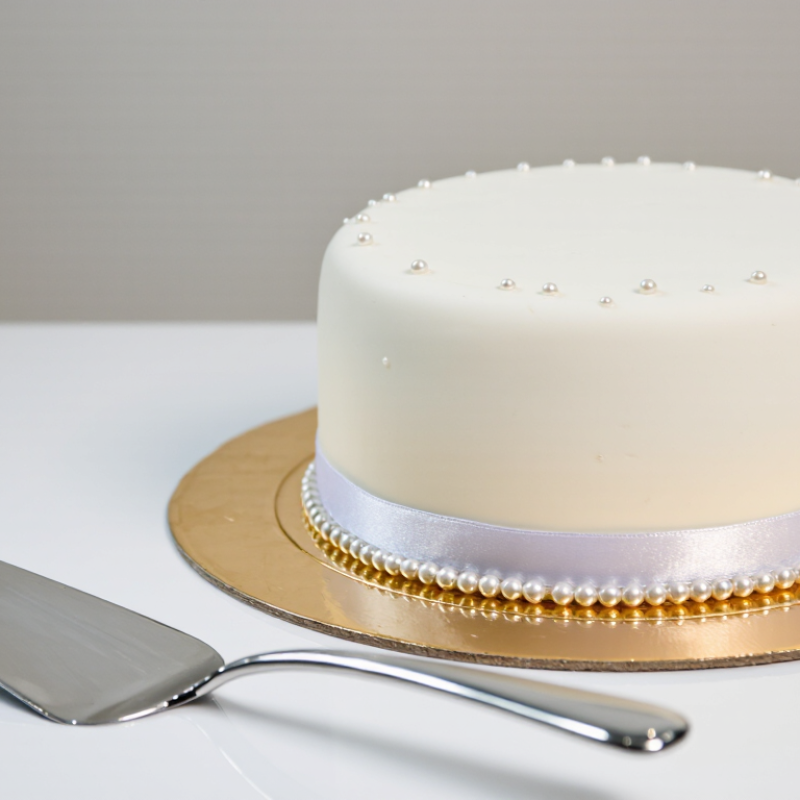
A mini cake board should match the cake’s true footprint, not just its recipe size. Measure the widest base after frosting, including piped edges or delicate decorations. For a round cake, choose a board with about 1 to 2 inches of clearance around the entire base. A 4-inch cake may need a 6-inch board. This space supports lifting, boxing, and clean presentation.

Height matters as much as diameter. Measure from the board surface to the tallest decoration, such as a buttercream swirl, fruit piece, or small topper. A tall mini cake can look unstable on a narrow board. Check the board’s thickness and weight capacity, especially when the cake has several layers. The board should remain flat when carried with one hand. That detail is easy to overlook.

For square cakes, measure both sides because frosting can make the corners wider. A Mini Square Cake Board should extend beyond each corner without creating an awkward empty border. Around 1 inch of visible clearance often looks balanced, but sharp designs may need more room. I have seen measurements fail when decorations were added after boxing. Measure again at the finished stage. It takes less than a minute. Undersizing can damage edges, while oversizing may make a tiny cake look lost. A small error is still a useful reminder: presentation space must serve the cake, not compete with it.

Match Board Diameter to Cake Size with a 2–5 cm Presentation Margin

How to Choose the Right Mini Cake Board?

A mini cake board should support the cake without making it look lost. Measure the cake diameter after chilling and frosting. Then add a 2–5 cm presentation margin to the total diameter.

For a 12 cm cake, choose an 14–17 cm board. A 15 cm cake usually suits a 17–20 cm board. The extra space frames the cake and leaves room for careful lifting.

The margin also protects decoration during handling. Sugar flowers, piped borders, and chocolate shards can extend beyond the sponge. A narrow board may crush these details inside the box. A very wide board can look unfinished and waste packaging space. According to IMARC Group’s 2024 cake market report, the global cake market reached about USD 65 billion in 2023. That scale reflects growing demand for consistent presentation, even in smaller formats.

For chilled desserts, select a rigid, moisture-resistant surface. Mini Cake Board Plastic options can work well when food-contact compliance and load capacity are clearly documented.

Check the board under a filled cake before selling it. It should not bend at the center. I once allowed only a 2 cm margin for a tall mousse cake, and the decoration touched the carton. That choice looked efficient, but it was not. A 4 cm margin would have handled the movement better.

Packaging reports from Smithers also identify lightweighting as a major industry direction, but thinner materials should never replace reliable support.

Compare 1.5–3 mm Board Thickness with Weight and Moisture Load

Choosing the right mini cake board starts with the cake’s weight and moisture load. A 1.5 mm board suits small, dry sponge cakes with light decoration. It works well for short delivery distances. Thin boards save space. But that can backfire.

A 2 mm board offers better support for buttercream, ganache, or several toppings. In packing trials, a six-inch cake weighing 700–900 grams felt more stable on this thickness. A snug Mini Cake Box also reduces sliding during transport. Weigh the finished cake, not the empty sponge. Cream can add surprising weight. I once underestimated a fruit filling by nearly 200 grams.

Moisture needs separate attention. Fresh fruit, syrup, and soft fillings can weaken uncoated board edges. A 2.5 mm board is often safer for cakes carrying moderate moisture, especially during warm delivery. Check the underside after thirty minutes in the box. Soft spots or curling signal trouble. A 3 mm board provides stronger resistance for tall cakes, dense decorations, or longer journeys. However, thickness alone cannot solve poor surface protection. A coated board, dry storage, and a tight-fitting box still matter. My own early tests focused too much on thickness. The result was stable cakes with damp edges.

Check ISO 536 Grammage and ISO 534 Thickness for Board Consistency

How to Choose the Right Mini Cake Board?

Mini Cake Trays often look simple, but board consistency affects every small dessert. Start with ISO 536 grammage, measured in grams per square metre. Higher grammage usually provides more material, but it does not guarantee better stiffness. A dense, well-formed board can outperform a heavier, poorly bonded sheet.

ISO 534 thickness is equally important. Measure thickness in micrometres under controlled pressure and conditioning. A board that varies by 40–60 micrometres may create uneven edges beneath delicate cakes. I once judged boards by weight alone. That was a mistake. The lighter sample actually stayed flatter during handling.

FAO’s Global Forest Products Facts and Figures 2023 reported about 415 million tonnes of paper and paperboard production worldwide in 2022. Such scale makes process consistency essential, especially for food-service packaging. Request test results showing grammage and thickness averages, ranges, and sampling conditions. Check several points across one sheet, not just one corner. A practical inspection also includes placing a finished cake on the board for several minutes. Watch for bending, surface marks, or moisture distortion. The numbers help, but real handling can still expose weaknesses.

How to Choose the Right Mini Cake Board?

Check ISO 536 Grammage and ISO 534 Thickness for Board Consistency

This anonymous example compares five mini cake board samples using grammage measured in g/m² according to ISO 536 and thickness measured in micrometres according to ISO 534. A consistent board should maintain similar values across samples; large variation may affect rigidity, handling, and cake presentation.

Verify Food-Contact Safety Under FDA 21 CFR 176.170 and 176.180

How to Choose the Right Mini Cake Board?

A mini cake board touches food, icing, moisture, and sometimes melted fat. Size and stiffness matter, but food-contact safety matters more. FDA 21 CFR 176.170 addresses paper and paperboard used with aqueous and fatty foods. FDA 21 CFR 176.180 covers dry foods. A cake with buttercream or oil-based decorations may require closer review under fatty-food conditions.

Do not rely on “food grade” wording alone. Ask the supplier for a current declaration of compliance, supporting migration data, and the exact board construction. Check every layer, including coatings, adhesives, inks, and edge treatments. Confirm the intended temperature, contact time, and food type. A board suitable for a cool, dry pastry may not suit a warm cake with rich frosting. I once treated surface coating as the main concern. That was incomplete. The adhesive and printed underside also deserved attention.

Tips: Request test reports tied to 21 CFR 176.170 or 176.180. Match them to your actual cake recipe and storage conditions. Check lot traceability. Inspect for odor, color transfer, softening, or grease spots before use. Keep records. A supplier’s document can be useful, but it should be specific, recent, and technically clear.

Evaluate Foil, Coating, and Grease Resistance for 4–8°C Cake Storage

How to Choose the Right Mini Cake Board?

Mini cakes stored at 4–8°C need more than a stiff base. Moisture, cream fat, and condensation can weaken the board. The FDA Food Code 2022 recommends cold holding at 5°C (41°F) or below, so an 8°C cabinet deserves caution. USDA FSIS guidance also recommends refrigerators at 4°C (40°F) or below. Measure the actual shelf temperature, not only the display reading.

Choose food-contact foil with an even seal and no exposed paper edges. Foil reflects moisture, but it does not automatically stop grease migration. A coated board performs better when the coating resists oil and water together. Ask for grease-resistance test results, such as TAPPI T559 or an equivalent method. Also check whether the coating remains stable after 24–72 hours of chilled storage. In practical testing, a board may look dry at two hours, then develop a soft ring overnight. I still find this easy to underestimate.

Tips: Place a chilled cake on the board, wrap it, and inspect it after 24 hours. Press the underside gently. If it bends, stains, or smells papery, reject that specification. Test the exact cake recipe, because chocolate cream and fruit fillings release different moisture levels. Do not rely on thickness alone. A thicker board with poor coating can fail sooner than a thinner, well-sealed board. Keep records of temperature, storage time, and visible changes; imperfect notes are better than memory.

FAQS

Which safety standards should I check for a mini cake board?

Check FDA 21 CFR 176.170 for aqueous and fatty foods. Check FDA 21 CFR 176.180 for dry foods. Match the standard to your cake, frosting, temperature, and contact time.

Is “food grade” wording enough?

No. Ask for a current declaration of compliance. Request migration data and the exact board construction. Vague wording is not enough.

Which board layers need review?

Review the foil, coating, paperboard, adhesive, inks, and edge treatments. The underside matters too. I once focused only on the coating. That was incomplete.

How should I assess a board for buttercream or oily decorations?

Treat buttercream and oil-based decorations as fatty-food contact. Ask for grease-resistance results, such as TAPPI T559 or an equivalent method. Test the actual frosting recipe.

What should I check when storing cakes at 4–8°C?

Measure the shelf temperature with a thermometer. Do not trust the cabinet display alone. An 8°C cabinet deserves caution.

Does foil automatically prevent grease migration?

No. Foil mainly helps reflect moisture. It does not guarantee grease resistance. Look for an even seal and no exposed paper edges.

How long should I test a chilled cake board?

Inspect the board after 24 hours. For stronger evidence, check it again after 48 or 72 hours. A soft ring may appear overnight.

What signs mean the board should be rejected?

Reject it if the board bends, stains, smells papery, or shows grease spots. Check for color transfer and softening. Trust visible evidence.

Does a thicker mini cake board perform better?

Not always. A thick board with weak coating can fail sooner. A thinner board may perform better with proper sealing.

What records should I keep during testing?

Record the cake recipe, temperature, storage time, and visible changes. Note the lot details and supplier documents. Imperfect notes beat memory.

Conclusion

Choosing the right Mini Cake Board begins with understanding the cake’s actual dimensions, including its base diameter, height, and the extra space needed for attractive presentation. The board should generally extend 2–5 cm beyond the cake so it provides visual balance, supports decorations, and allows safer handling without appearing oversized.

Thickness is another important factor. Boards between 1.5 and 3 mm should be selected according to the cake’s weight, filling, decoration, and moisture load. Consistent grammage and thickness can be checked through ISO 536 and ISO 534 measurements. For food safety, confirm that the board and its surface treatments meet applicable food-contact requirements, including relevant provisions such as FDA 21 CFR 176.170 and 176.180 where required. Finally, assess foil quality, coating durability, and grease resistance, especially when cakes will be stored at 4–8°C. These details help maintain structural strength, hygiene, appearance, and reliable performance throughout storage and delivery.
Sophie

Sophie

Sophie is a dedicated marketing professional at Aotong, specializing in the production of high-quality baking packaging products. With a keen eye for detail, she possesses an impressive depth of knowledge about the extensive product range that Aotong offers, including cake boxes, Cupcake Boxes,......
Previous How to Choose the Right Pastry Packaging Box?