+86-18394093613 


Picking the perfect Pastry Packaging Box isn't just about choosing cute colors or cool printed logos. It’s really about making sure your pastries stay safe, fresh, and look great when they reach your customers. Think about a cream-filled éclair—if it's jostled around during delivery, it might look a mess. Or those warm croissants—if they sit in a box too long, they could get soggy or release moisture. Tiny details honestly make all the difference.
Dr. Susan Selke, a packaging expert, puts it well—"Packaging is a system, not just a container." And that’s spot-on for pastry businesses, too. The material, the structure, the closure, vents, even the printing—they all have to work in harmony. For instance, a sturdy paperboard box might be perfect for layered cakes, while a grease-resistant foldable carton could be better for cookies or tarts. Adding a window can make the product look tempting, but it might also weaken insulation or bump up production costs. It’s all about balance.
Start by understanding your pastry—measure its height, weight, decorations, and think about how it’ll travel. Make sure there’s enough room for frosting and toppings without letting it slide around. Too much space, and your goodies will shift; too little, and you risk squishing or damaging them. Also, don’t forget to test your packaging with real pastries, not just empty boxes—this step often gets overlooked but is so important.
And let’s not forget about handling. Can your customers open the box without messing up the pastry? Will it stay steady on a café counter? Is it quick and easy to close during those busy morning rushes? These little checks can reveal problems photos just can’t show.
Sustainability is another tricky area. Recyclable sounds great, but beware of coatings, adhesives, and mixed materials—these can make disposal a headache. Always check what’s recyclable locally because, honestly, no box is perfect.
In this guide, we’ll compare size, materials, design, protection, branding, cost, and everyday performance. Ultimately, your choice should match what your product needs and what your business can handle. Eye-catching looks get attention, but steady, reliable protection keeps customers coming back.”
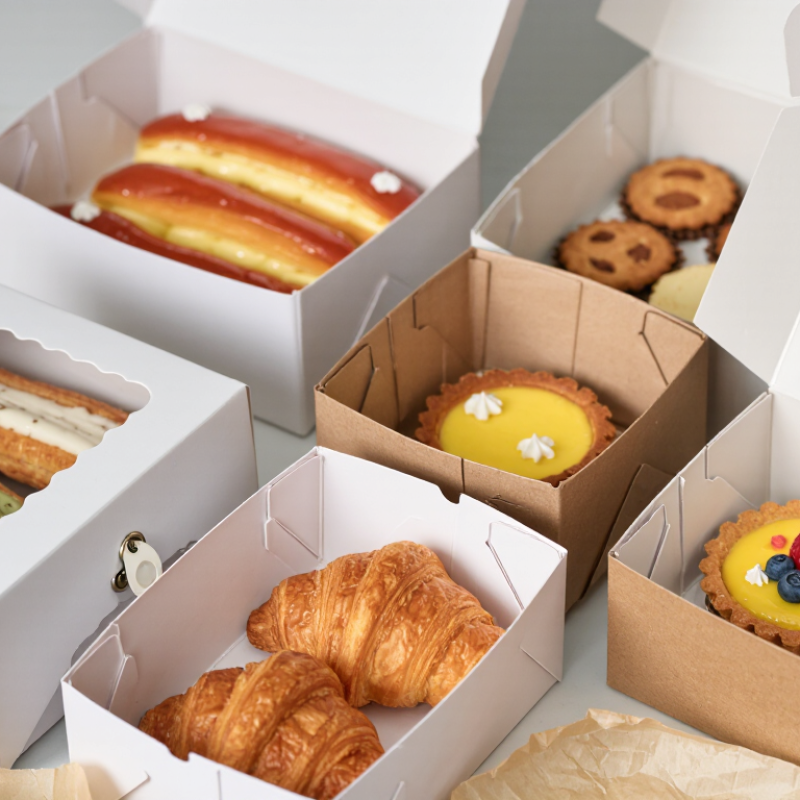
Start with the pastry, not the artwork. A butter-rich croissant needs headroom because its layers crush easily. A glazed tart needs a stable base and a lid that prevents contact. Cream-filled pastries need stronger protection and suitable food-contact materials. Measure each item after cooling. Heat can soften coatings and create condensation inside the box. That small detail is often missed.
Quantity changes the structure. One delicate pastry may need an insert or cavity. Six cookies can share a tray, but only when they have similar shapes and weights. Leave enough space for paper liners, without allowing movement during delivery. According to UNEP’s 2023 Turning off the Tap report, packaging represents about 36% of global plastic production. This supports a practical approach: use only the material needed for protection. Smithers’ packaging outlook also identifies convenience and food delivery as major market drivers. Protection still matters more than appearance.
Tips: Test the packed box with a short delivery simulation. Check corner damage, sliding, grease marks, and lid pressure. Measure the box interior, not only the pastry. A box that looks attractive may still be too shallow. I once underestimated frosting height by a few millimeters; the lid touched the decoration. That mistake was avoidable. Recheck dimensions after chilling, filling, and stacking.
Choosing Pastry Box Packaging starts with freshness, not appearance. A warm croissant releases steam, while a chilled tart attracts condensation. If the box traps moisture, the crust softens quickly. If it breathes too much, cream dries and odors enter.
The FAO’s 2019 State of Food and Agriculture report estimates that 14% of food is lost between harvest and retail. Pastries are especially vulnerable because their quality changes within hours. Choose food-contact paperboard with a grease-resistant inner surface. For moist fillings, add a suitable moisture barrier. Small ventilation openings can protect crisp products, but oversized vents may accelerate drying.
Safety deserves equal attention. Packaging should be tested for food-contact compliance, ink migration, odor transfer, and compression strength. A 2023 report from Smithers identifies barrier performance and recyclability as major packaging development priorities. However, recyclable material is not automatically safe or suitable. Test it with the actual pastry, temperature, and storage time.
A neat box can still fail.
In practical trials, check the base after transport. Does butter stain through? Does the lid touch icing? Can a customer open it without crushing the pastry? These simple checks expose weaknesses that specifications may miss. The best material choice is sometimes less elegant, and that is difficult to explain. Freshness must come first.
A Pastry Box should match the shape and movement of its contents. Square boxes suit cupcakes and small tarts, while a longer rectangle keeps éclairs from pressing against each other. Round cakes need a close-fitting base and enough height for frosting. ForBox Pastry packaging, measure the finished pastry, not just the baking tin. Leave a little clearance, but avoid a loose fit that lets items slide during delivery.
Structure matters as much as shape. A folded tuck-top box works for lighter pastries and quick counter service. Heavier cakes benefit from a firm base and reinforced corners. If the box will be stacked, test it with realistic weight; a lid that bows under pressure can damage decoration. A clear window is useful, though it may weaken the top panel. That trade-off is easy to overlook.
Tips: Place a paper liner inside and gently tilt the closed box. If pastries shift, add a fitted insert or reduce the interior space. Check that the lid closes without touching icing. A small prototype can reveal problems, but one test may not reflect a busy delivery route.
Compare common box structures by the design needs they typically serve. Ratings are qualitative planning scores from 1 (low) to 5 (high), not measured industry data.
Use the scores as a starting point: match the box to pastry size, fragility, display needs, and delivery conditions, then test the chosen structure with the actual product.
Choosing the right Pastry Box starts with ventilation, because fresh pastries release heat and moisture after baking. A sealed box can trap condensation, soften crusts, and blur decorative icing. Micro-perforations help, but oversized holes may dry delicate products. Moisture wins quickly.
In practical packing trials, I check the box thirty minutes after filling it. I look for fogging, greasy spots, collapsed corners, and movement during handling. A firm paperboard structure, fitted insert, and accurate internal dimensions reduce crushing. This matters beyond appearance. The Food and Agriculture Organization’s 2019 State of Food and Agriculture report estimates that 14% of food is lost between harvest and retail. Better packaging cannot solve every loss, but it can limit preventable damage during distribution.
Product visibility also requires balance. A clear window lets customers inspect color, layers, and finish before purchase. However, weak film or a poorly sealed window can reduce protection. Keep the display area clean and large enough to show the key feature, not the entire product. Visibility sells trust. The U.S. Environmental Protection Agency’s 2024 Wasted Food Report estimates 58.6 million tons of food waste occurred across retail, food service, and residential sectors in 2022. That figure should encourage careful sizing and testing, not exaggerated packaging. I have seen attractive boxes fail because the window fogged during delivery. Do not guess. Test ventilation, compression, and visibility with the actual pastry, filling, and delivery route.
How to Choose the Right Pastry Packaging Box?
A Pastry Box should make the product recognizable before the lid opens. Match its color, typography, and texture with your shop’s visual identity. A soft-touch finish can suggest luxury, while uncoated paper feels more natural and handmade. Keep the logo visible, but do not let it overpower the pastry. Customers remember the first visual cue. Dotcom Distribution’s 2023 consumer research found that 40% of shoppers were more likely to buy again after receiving premium, branded packaging. That matters for repeat pastry purchases.
Customization should also improve the customer experience, not only decoration. Choose grease-resistant board for butter-rich pastries. Add a fitted insert when delicate layers may slide during delivery. A small viewing window can build appetite, but it may weaken insulation or recyclability. PwC’s Voice of the Consumer Survey 2024 reported that 46% of consumers buy more sustainable products to reduce environmental impact. Use clear disposal guidance and avoid unnecessary coatings. Test the box with warm pastries, condensation, and a rough car ride. Real conditions expose weak corners quickly. My own bias is to admire beautiful boxes too early. A clever design can still frustrate customers if the lid sticks, crumbs escape, or the box feels wasteful. Leave room for imperfect feedback. A five-second opening test may reveal more than a polished presentation.
Choosing the right pastry packaging box requires more than attractive colors and a neat logo. Sustainability, cost, and practical performance must work together. A Pink Pastry Box made from recycled paper can reduce virgin material use, but check its recycled content and coating. Some “compostable” boxes need industrial facilities, which may not exist locally. Ask suppliers for material certificates and disposal guidance. That small step improves purchasing reliability.
Cost includes more than the unit price. Measure cakes, tarts, and pastries carefully to avoid oversized boxes. Extra space increases material use and shipping costs. A snug fit protects delicate icing and reduces movement during delivery. Test several box sizes with real products. Include inserts, labels, storage, and damaged orders in your calculation. A cheaper box may become expensive after poor transport performance.
Tips: Place a filled box under light pressure for ten minutes. Check whether the lid bends or the pastry touches the sides. Add a grease-resistant layer when buttercream or fruit filling is used. Test stacking in a warm delivery vehicle. I once overlooked condensation, and the printed surface became weak. That mistake was preventable. Choose recyclable designs when possible, but confirm local recycling rules before making environmental claims.
| Packaging Option | Typical Material | Sustainability Profile | Indicative Unit Cost* | Moisture and Grease Resistance | Protection and Stackability | Customization Potential | Best Use |
|---|---|---|---|---|---|---|---|
| Folding Paperboard Box | Food-grade paperboard, commonly around 300–500 gsm | Widely recyclable when clean and free from incompatible coatings; renewable fiber content is possible. | US$0.12–0.45 | Good Performs well with a grease-resistant paper lining or water-based coating. | Good Lightweight and easy to stack; suitable for most dry pastries. | Excellent Supports offset, flexographic, or digital printing and die-cut windows. | Cookies, muffins, donuts, tarts, and everyday bakery orders. |
| Corrugated Paperboard Box | Fluted corrugated fiberboard with a paper liner | Recyclable in established paper-recycling systems; uses more material but provides stronger protection. | US$0.25–0.90 | Good Can be combined with a food-safe inner wrap or tray for greasy products. | Excellent Higher compression strength and cushioning during transport. | Good Suitable for printed outer liners, labels, and simple structural designs. | Delivery orders, multi-item assortments, and fragile layered pastries. |
| Kraft Paper Window Box | Kraft paperboard with a cellulose or plastic viewing window | Paperboard is generally recyclable; the window should be removed or confirmed as compatible with local recycling rules. | US$0.20–0.70 | Moderate to Good Suitable for short holding periods when pastries are not excessively oily or wet. | Good Rigid enough for retail display and light transport. | Excellent Natural kraft appearance, labels, stamps, and printed graphics are available. | Gift assortments, cookies, cupcakes, and display-oriented bakery products. |
| Rigid Paperboard Box | Thick laminated or wrapped paperboard, often with an insert | Paper-based structure can be recyclable, but laminated coverings, magnets, foam, and mixed materials may reduce recyclability. | US$0.80–3.00 | Very Good Works well with trays, liners, and interior barriers. | Excellent Strong presentation and high resistance to crushing. | Excellent Suitable for premium finishes, compartments, sleeves, and fitted inserts. | Premium Gift Boxes, seasonal collections, and delicate pastries. |
| Molded Fiber Box or Tray | Pressed recycled paper fiber or agricultural fiber pulp | Typically compostable or recyclable depending on the formulation, coatings, and local facilities. | US$0.30–1.20 | Moderate May require a grease-resistant liner for buttery or oil-rich pastries. | Good Provides cushioning and product separation; shapes may limit stacking efficiency. | Moderate Color and molded shapes are customizable, but fine graphics are usually limited. | Egg-based pastries, delicate items, and packaging focused on fiber content. |
| Clear Plastic Bakery Box | PET or PP plastic, sometimes with a separate paperboard base | Recyclability depends on the resin type, local collection system, color, and attached materials; it is not compostable. | US$0.18–0.80 | Excellent Strong resistance to moisture and grease for chilled or high-moisture products. | Good Offers visibility and moderate rigidity, but may crack under impact or cold conditions. | Moderate Clear presentation is strong; printed graphics are usually limited to labels or sleeves. | Decorated cakes, cupcakes, chilled desserts, and products requiring visibility. |
| Aluminum Foil Container with Paperboard Lid | Thin aluminum container paired with a paperboard or plastic lid | Aluminum has high recycling value where collected; clean separation of the lid and food residue improves recovery. | US$0.15–0.75 | Excellent Strong barrier against grease, moisture, light, and oxygen. | Good Useful for baking and reheating, but the container can deform under heavy pressure. | Moderate Customization is usually applied to the lid, label, or sleeve. | Fruit pies, baked desserts, takeaway pastries, and heat-tolerant products. |
Premium Cake Boxes from China offer international wholesale buyers a practical combination of presentation, protection, and production efficiency. Designed for cakes, pastries, and other delicate desserts, these boxes feature an ideal size, clean structure, and elegant appearance that enhance the customer’s unboxing experience. As noted in Smithers’ global packaging industry analysis, the worldwide packaging market exceeds US$1 trillion annually, while paper-based formats continue to attract demand because they are lightweight, printable, and easier to handle across distribution channels. This makes well-designed cake packaging an important part of a bakery’s product presentation and logistics strategy.
Manufactured by a reliable Chinese factory, these premium cake boxes can support wholesale requirements with consistent dimensions, durable paperboard construction, and customizable finishes. Their stable structure helps reduce crushing during storage and transportation, while the refined exterior creates a professional image for bakeries, dessert shops, hotels, and catering suppliers. Industry research from Grand View Research also identifies growing demand for sustainable Paper Packaging, driven by retailers and consumers seeking alternatives to less recyclable materials. With scalable production, quality-focused manufacturing, and export-ready packaging solutions, these cake boxes provide an effective way for international buyers to improve dessert presentation while maintaining practical costs and dependable supply.
Measure the pastry after cooling, filling, and chilling. Measure the box interior, too. Leave space for liners, but prevent sliding. A beautiful box can still be too shallow.
Croissants need extra height because delicate layers crush easily. Glazed tarts need stable bases and lids without contact. Cream-filled pastries need stronger protection and suitable food-contact materials.
One fragile pastry may need an insert or separate cavity. Six similar cookies can share one tray. Different weights may move and cause damage. I sometimes underestimate movement.
Not always. Fresh pastries release heat and moisture after baking. Small ventilation openings can reduce condensation. Large openings may dry delicate products. Moisture wins quickly.
Measure the decoration height after filling. Add enough headroom above the highest point. Check the lid after chilling. A few millimeters can matter.
Pack the actual pastries and inspect the box after thirty minutes. Check fogging, grease marks, sliding, crushed corners, and lid pressure. Use the real delivery route when possible.
A clear window shows color, layers, and decoration. It can build customer confidence. However, weak film or fogging reduces protection and visibility. Show the key feature, not everything.
Use only the structure needed for safe protection. Avoid oversized boxes with excessive empty space. Accurate sizing reduces movement and material waste. The ideal design is not always the prettiest.
Choosing the right Pastry Packaging Box begins with understanding the pastry itself, including its size, shape, quantity, weight, and sensitivity to moisture or heat. The packaging material should protect freshness, maintain food safety, and prevent damage during storage and delivery. A well-designed box should provide enough space without allowing products to shift, while features such as ventilation, secure closures, inserts, and clear windows can improve protection and product visibility.
Packaging should also support the desired customer experience through attractive branding, practical customization, and easy handling. At the same time, businesses should consider recyclable or responsibly sourced materials, production costs, storage efficiency, and performance throughout transportation. By balancing product requirements, structural design, appearance, sustainability, and budget, businesses can select a Pastry Packaging Box that preserves pastry quality while presenting the products in a professional and appealing way.