Leave Your Message
0%

So, picking the right mini cake board isn't just about color or price—though, let's be honest, those do catch your eye. But for buyers like you, who are sourcing globally, it's a bit more nuanced. You've got to think about thickness, how well it handles moisture (nobody wants a soggy board), the edge finishing, the coating quality, and honestly, how it survives shipping without falling apart. I mean, a light and fluffy six-inch sponge? That's a totally different beast compared to a dense chocolate cake loaded with buttercream. They need different bases, no question.

Ethan Cole's been in the Bakery Packaging game for over fifteen years now – he's the Product Development Director at BoardCraft Packaging. He's got a pretty down-to-earth take on it: 'A board isn't just for show; it's the cake's first line of defense.' That's the kind of practical thinking that shaped our rundown of the top 10 mini cake board types for buyers around the world. Sure, each option has its perks, but honestly? There's no magic bullet that works for every market.

So we've got a whole range of options here—foil-covered boards, corrugated ones, rigid laminated, scalloped, reusable plastic, and even moisture-resistant paperboard. Some are all about that premium look, while others are more about keeping shipping costs down or making storage a breeze. Take the Mini Cake Base Board—it might seem simple enough, but if you get the sizing wrong, you're dealing with cakes that slide around, bend, or have edges sticking out where they shouldn't. Honestly? It's the little details that matter. They really do.

Before you commit to a supplier, you'd do well to check their consistency, documentation, tolerances, and how they package things. But honestly, don't stop there—local rules about food contact can vary widely, so you really need to verify those yourself. You know, a lot of buying guides out there will tell you to just go with the cheapest option, and honestly, that's a bit risky. Price alone doesn't tell you if a board is reliable. I've seen it happen—where a cheaper board ends up costing you way more in the long run because the cartons show up all warped or scratched, and you're stuck dealing with replacements. Okay, let's be real about Mini Cake Boards. This guide digs into what each type is actually good for, where it falls short, and what to keep in mind before you buy. It's all about helping your bakery make a decision based on solid evidence instead of just guessing or going on what someone told you.
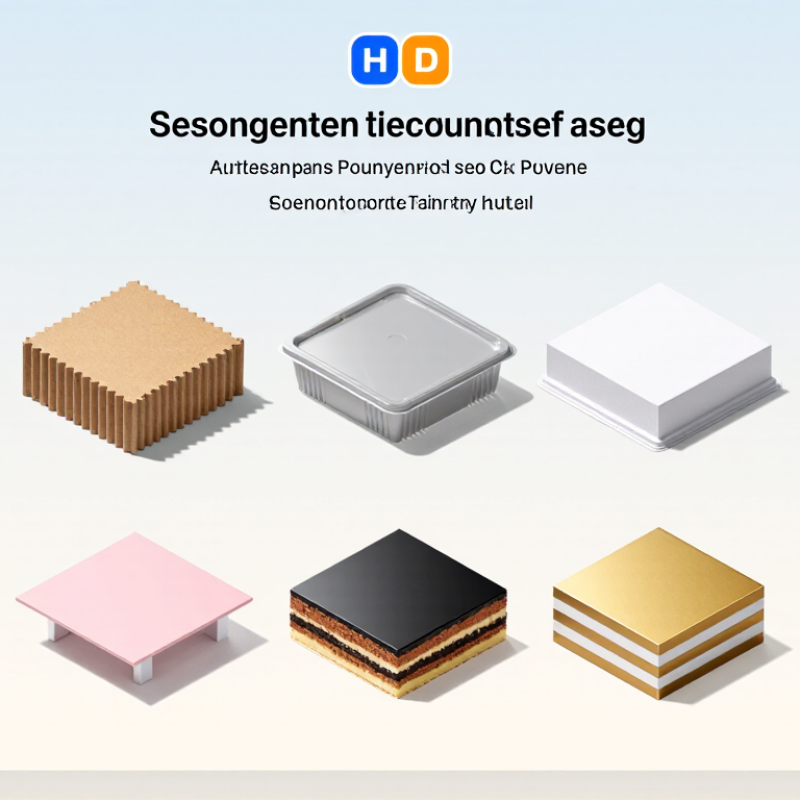
Top 10 Mini Cake Board Types for Global Buyers?

Define Mini Cake Boards by Size, Load Capacity, and Food-Contact Use

Mini Cake Boards should be defined by three measurable factors: size, load capacity, and food-contact use. A 4-inch board suits compact mousse cakes, while a 6-inch board gives better edge protection for taller designs. Leave roughly 0.5 to 1 inch around the cake. That small margin helps prevent frosting damage during handling. AMini Square Cake Boardalso needs accurate corner clearance inside Cake Boxes.

Load capacity depends on board thickness, material, moisture resistance, and support structure. A single-layer paperboard may carry a light sponge cake, but a dense fruit cake needs laminated board or reinforced construction. In practical packing tests, I would check deflection after 30 minutes, not only lifting performance. Cakes shift during delivery. Smithers valued the global packaging market at about US$1.2 trillion in 2023, showing how performance and material efficiency increasingly influence packaging decisions. Yet board capacity is still often described vaguely.

Food-contact use requires separate attention. The board should have a suitable coating, clean manufacturing controls, and documentation for the destination market. The European Commission’s food-contact materials framework requires materials to avoid transferring harmful substances into food. Similar principles apply under United States food-contact regulations. Do not treat “food grade” as a complete specification. It is not. Ask for migration testing, coating details, and storage limits. Future Market Insights identifies Bakery Packaging as a growing category, but growth does not remove testing responsibilities. I would also reassess recycled content claims when grease, condensation, or direct contact is expected.

Classify the Top 10 Types by Material, from 1.5 mm Cardboard to 12 mm MDF

Global buyers usually compare Mini Cake Boards by material, thickness, moisture resistance, and load strength. The following ten types cover common purchasing needs:

1.5 mm paperboard for lightweight cupcakes;
2 mm grey cardboard for standard sponge cakes;
2.5 mm coated cardboard for cleaner presentation;
3 mm corrugated cardboard for better rigidity;
3 mm laminated board for improved moisture protection;
3 mm plastic for reusable service;
4 mm Mini Cake Board Plastic for heavier individual cakes;
6 mm plywood for a natural appearance;
9 mm MDF for strong display bases;
12 mm MDF for large, layered cakes.

Each option has a practical limit.

Thin cardboard feels economical, but it can bend under cream-heavy cakes. Coated surfaces help, though damaged edges may still absorb moisture. Plastic is easier to wipe, while plywood may show grain differences between batches. MDF offers excellent stiffness and a smooth face, yet it is heavier and less convenient for frequent transport. I have found that thickness alone does not guarantee performance. Board diameter, cake weight, storage humidity, and edge finishing matter just as much.

Tips: Test the board with a fully decorated sample for 24 hours. Check bending, surface marks, and moisture penetration. Ask suppliers for thickness tolerance and packaging details. A small trial order is wiser than trusting a specification sheet alone. Even experienced buyers sometimes select boards that look strong but feel unstable after delivery.

Compare Round, Square, Scalloped, and Custom Boards in 4–8 Inch Sizes

Top 10 Mini Cake Board Types for Global Buyers

Round, square, scalloped, and custom boards suit different cakes and shipping conditions. For 4–8 inch cakes, the ten practical choices include four round sizes, four square sizes, two scalloped sizes, and one custom design. Round boards in 4, 5, 6, and 8 inches support smooth frosting and simple presentation. Their curved edges slide neatly into a Mini Cake Box.

Square boards offer more corner stability for layered cakes and sharp-edged decoration. Four, 5, 6, and 8 inch options work well with matching cartons. However, corners can catch during packing. I still check the internal clearance by hand, especially when icing rises above the board.

Scalloped boards in 6 and 8 inches add a decorative border without extra printed decoration. They look attractive under cupcakes and petite celebration cakes. Custom boards can combine unusual shapes, printed surfaces, or exact measurements. Buyers should confirm board thickness, moisture resistance, food-contact suitability, and load capacity before ordering. A 4 inch board may hold a small sponge, but not every dense fruit cake. Small details matter.

For global purchasing, request samples from each size range. Compare edge smoothness, flatness, odor, and stacking performance. A board that bends after refrigeration needs review. I have seen attractive scallops interfere with tight packaging. That mistake is easy to miss in photographs. Check the board, cake, and Mini Cake Box as one complete set.

Top 10 Mini Cake Board Types for Global Buyers

Comparison of commonly specified 4–8 inch board formats by nominal board size and shape.

Round and square boards provide the most consistent size references, while scalloped, heart, hexagon, and rectangle formats add presentation variety. Buyers should confirm the actual cake diameter, board thickness, edge finish, and food-contact suitability before ordering.

Evaluate Board Strength Through Thickness, Moisture Resistance, and Deflection

For global buyers, mini cake board strength starts with thickness, but thickness alone can mislead. A 1.5 mm board may support a small sponge, while a 3 mm board offers greater stiffness for layered cakes. Bending resistance rises sharply as thickness increases because stiffness is approximately proportional to thickness cubed. In practical terms, doubling thickness can theoretically increase bending stiffness eightfold, assuming the same material and structure. TAPPI T 489 and ISO 5628 provide recognized methods for measuring paperboard bending stiffness. Test results should include load, span, and deflection, not only thickness.

Moisture changes the decision. ISO 287:2017 uses controlled conditioning before measuring paper moisture, commonly near 23°C and 50% relative humidity. Packaging research from Smithers highlights moisture control as a continuing performance concern in fiber-based packaging. Under humid storage, uncoated paperboard can soften, warp, and lose edge strength. A food-contact liner or moisture-resistant coating helps, but coating quality varies. Check absorption using Cobb testing, such as ISO 535, rather than trusting vague “waterproof” claims. I have seen thick boards sag under a chilled cake when their edges absorbed condensation. That was not expected. It was a specification failure. Ask suppliers for deflection data after humidity conditioning, especially for export routes, refrigerated delivery, and cakes above 1 kg. A practical acceptance test can measure center sag after 30 minutes under the intended cake load. Short tests are useful. They are not the whole story.

Check Global Food-Contact, FSC, BRCGS, and ISO 22000 Compliance Requirements

Top 10 Mini Cake Board Types for Global Buyers

Mini cake boards may be round, square, scalloped, corrugated, solid paperboard, laminated, foil-faced, grease-resistant, reusable, or custom printed. Each type needs a suitable food-contact assessment. Paper fibers, coatings, adhesives, inks, and recycled content can affect safety. The board should not transfer odors, color, or chemicals to cream and sponge. Keep it clean.

Global buyers should request food-contact declarations for the destination market. Migration testing should match real use, including chilled storage and direct contact with oily frosting. FSC certification can support responsible fiber sourcing, but it does not replace food-contact approval. Check the certificate scope, supplier identity, and chain-of-custody documents.

BRCGS and ISO 22000 requirements usually concern the manufacturing food-safety system, not the board alone. Ask for valid certificates, audit scope, production-site details, traceability records, allergen controls, and complaint procedures. A batch code on each carton helps investigations. Packaging samples should match the approved specification. They often do not.

In practical sourcing, small details matter. A glossy surface may look premium but fail during cold storage. A thicker board may resist bending yet create more waste. Verify load strength with the actual cake weight, moisture level, and delivery route. No checklist is perfect. Recheck documents before every major order.

Top 10 Mini Cake Board Types for Global Buyers? - Check Global Food-Contact, FSC, BRCGS, and ISO 22000 Compliance Requirements

Practical comparison of common mini cake board constructions, typical commercial sizes, and the compliance evidence global buyers should request before approval.
Mini Cake Board Type Typical Sizes Common Structure Typical Thickness Best Use Food-Contact Requirement FSC Requirement BRCGS Packaging Materials ISO 22000 Relevance
Round Plain Paperboard Board 100–200 mm diameter
(4–8 in)
Solid paperboard, usually die-cut 1.2–2.5 mm Individual cupcakes, lunchbox cakes, small round cakes Food-contact declaration; migration and coating suitability must match the destination market Optional
Use certified fiber claims only when supported by a valid chain-of-custody scope
Buyer check
Request packaging-material certificate or equivalent site evidence
Supplier-system check
Relevant to the manufacturing site’s food-safety management system
Scalloped-Edge Paperboard Board 100–180 mm diameter
(4–7 in)
Die-cut solid board with decorative edge 1.2–2.0 mm Decorated mini cakes and retail bakery presentation All inks, adhesives, coatings, and exposed board surfaces require food-contact assessment Optional
Confirm certified material percentage and claim wording
Buyer check
Check hygiene controls, traceability, specifications, and complaint procedures
Supplier-system check
Verify the certificate scope covers the relevant packaging process
Square Paperboard Board 100–200 mm per side
(4–8 in)
Square solid board, plain or coated 1.5–2.5 mm Square mini cakes, brownies, petit fours, and portion desserts Confirm grease resistance, odor/taint performance, and suitability for direct contact Optional
FSC status relates to responsible fiber sourcing, not food-contact safety
Buyer check
Audit or certification evidence should cover conversion and storage controls
Supplier-system check
ISO 22000 supports food-safety management but does not replace product compliance testing
Rectangular Paperboard Board 80 × 120 to
150 × 220 mm
Solid paperboard, flat or folded-edge format 1.5–2.5 mm Bars, slices, loaf portions, and narrow celebration cakes Request food-contact declaration and evidence for coatings, adhesives, and printing components Optional
Validate certificate number, product scope, and supply-chain coverage
Buyer check
Review material specifications, batch traceability, and foreign-body controls
Supplier-system check
Useful evidence of controlled food-safety processes at the supplier site
Metallic-Laminated Paperboard Board 100–200 mm diameter
or 100–180 mm square
Paperboard laminated with metallic-look film or foil 1.2–2.5 mm Premium presentation, birthday cakes, and gift-ready desserts Assess the complete structure: board, laminate or foil, inks, varnish, and adhesive; verify no exposed unsuitable layer Usually limited
Laminated structures may affect certified-fiber claims and recyclability statements
Buyer check
Confirm controlled use of inks, coatings, laminating adhesives, and release materials
Supplier-system check
Verify hazard analysis covers chemical migration and supplier controls
Corrugated Mini Cake Board 100–250 mm diameter
or equivalent square
Fluted paper layer between paper liners 2.5–4.0 mm Heavier mini cakes requiring improved stiffness and impact resistance Confirm food-contact suitability of liners, adhesives, coatings, and any exposed flute edges Optional
Check whether all relevant paper components are within the certified scope
Buyer check
Request evidence for corrugation hygiene, pest control, storage, and traceability
Supplier-system check
Particularly relevant where the board is produced for direct food contact
Double-Layer Laminated Board 100–220 mm diameter
or 100–200 mm square
Two solid paperboard layers bonded together 2.0–3.5 mm Tall mini cakes and products needing extra load-bearing capacity Adhesive must be suitable for the intended contact condition; verify grease, moisture, and temperature performance Optional
Check fiber sourcing for both layers and the validity of any FSC claim
Buyer check
Review bonding-process controls, specifications, and finished-product inspection
Supplier-system check
Confirm the food-safety plan includes adhesive and lamination hazards
Raised-Edge or Folded-Rim Board 100–180 mm diameter
or 100–180 mm square
Die-cut board with an upturned perimeter or folded rim 1.5–2.5 mm Messier desserts, cream cakes, and products needing edge containment Check that folds, seams, adhesives, and inner surfaces are suitable for direct contact Optional
Confirm certified-fiber coverage for the converted board
Buyer check
Verify dimensional control, clean folding, and prevention of loose fibers or edges
Supplier-system check
Confirm process controls cover forming, adhesive application, and hygiene
Grease-Resistant Coated Board 100–220 mm diameter
or 100–200 mm square
Paperboard with a functional grease-resistant coating 1.2–2.5 mm Buttercream, chocolate, mousse, and high-fat mini cakes Obtain coating declaration, migration data where required, and confirmation of PFAS-related restrictions in the target market Optional
Coating does not itself establish FSC eligibility or food safety
Buyer check
Review coating control, cure or drying conditions, and batch release records
Supplier-system check
Verify hazard analysis addresses coating chemistry and intended use
Window-Compatible Cake Board 100–180 mm diameter
or 100–180 mm square
Board designed for a presentation box or clear-window package 1.2–2.5 mm Retail gift packs and individually boxed mini cakes Assess board, box interface, window film, inks, and adhesives as a complete food-contact packaging system Optional
Keep FSC claims separate from claims about the plastic window or other non-fiber parts
Buyer check
Confirm the relevant packaging components and production steps are within the audit scope
Supplier-system check
Useful where the supplier manages the complete food-contact packaging system
Buyer verification note: “Food-contact compliant” is not a single worldwide approval. The importer or buyer should confirm the destination-market requirements, intended food type, contact time, temperature, and whether contact is direct or indirect. For paper and board, commonly reviewed frameworks may include applicable national rules, EU food-contact framework and good manufacturing practice requirements, or relevant United States food-contact provisions.
Certification note: FSC addresses responsible forest-based material sourcing; BRCGS Packaging Materials addresses packaging-product safety and quality systems; ISO 22000 addresses food-safety management systems. None of these certifications alone proves that a specific finished board meets every food-contact migration requirement. Request current certificates, scope statements, declarations of compliance, test reports, technical specifications, and lot traceability records.

Select Suppliers Using MOQ, 50–1000 Unit Cartons, Lead Time, and Incoterms

For global buyers, the top 10 Mini Cake Trays types should be compared by board material, coating, shape, thickness, edge finish, and stacking strength. However, supplier terms often decide whether a good sample becomes a profitable order. In purchasing practice, a 50-carton MOQ suits market testing, while 500–1,000 cartons usually supports better unit pricing. The right quantity depends on storage space, seasonal demand, and cash flow.

Lead time needs more than one number. Ask for production days, inspection time, and ocean or air transit separately. UNCTAD’s Review of Maritime Transport reports that maritime shipping carries over 80% of global merchandise trade by volume, so port congestion can affect delivery plans. Add a realistic buffer. I once treated a quoted 18-day lead time as the full schedule. It was not. Incoterms 2020 also matter: under FOB, buyers manage main carriage; under DDP, suppliers handle more delivery responsibilities, but landed costs require careful verification.

Tips: Request samples from two or three tray types before approving 50–1,000 cartons. Confirm carton dimensions, gross weight, pallet count, and moisture protection. The International Chamber of Commerce states that Incoterms define delivery responsibilities, costs, and risk transfer, not product quality or payment terms. Ask suppliers to state these terms on the quotation. Check whether the price includes export packing and documentation. Small omissions become expensive. Also review the Smithers packaging outlook alongside your own sales data; broad market forecasts cannot replace a realistic local demand estimate.

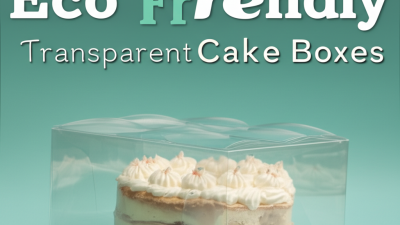
Customizable Cake Boxes from China Suppliers: Eco-Friendly Solutions Informed by Smithers and Grand View Research Reports

Sustainable packaging is becoming a practical priority for bakeries and packaging companies serving environmentally conscious consumers. Grand View Research estimates that the global sustainable packaging market was valued at more than US$100 billion in 2022 and is projected to grow at an annual rate of over 7% through 2030. Smithers’ industry analysis likewise highlights rising demand for renewable materials, lightweight formats, and packaging that supports circular-economy goals. For cake producers, this trend creates an opportunity to combine responsible material choices with a premium presentation.

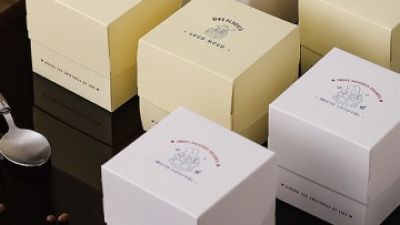
Our China-based factory supplies customizable cake boxes made from 100% food-grade biodegradable materials. Available in tailored sizes, structures, finishes, colors, and printed designs, these boxes help international bakery chains maintain consistent visual identity across locations while accommodating different cake styles and delivery requirements. Structural options can improve stability during transport, while carefully developed opening experiences add tactile and visual appeal at the point of purchase.

Customization also supports operational efficiency. Standardized box specifications can simplify procurement and inventory planning, while optimized dimensions may reduce unnecessary material use and shipping volume. By selecting a dependable manufacturing partner, bakeries and packaging companies can develop cake packaging that protects delicate products, communicates premium quality, and aligns with measurable sustainability objectives informed by current market research.

FAQS

Which material suits a lightweight cupcake?

A 1.5 mm paperboard usually suits small, lightweight cupcakes. It is economical and easy to handle. Avoid cream-heavy cakes because the board may bend.

What thickness works for standard sponge cakes?

A 2 mm grey cardboard board suits many standard sponge cakes. A 2.5 mm coated board offers a cleaner surface. Damaged edges can still absorb moisture.

When should I choose corrugated or laminated board?

Choose 3 mm corrugated cardboard when extra rigidity matters. Select 3 mm laminated board when moisture protection matters more. Neither option is automatically suitable for every cake.

Is plastic better for repeated service?

Plastic is easier to wipe and may support repeated service. A 3 mm plastic board suits moderate loads. A 4 mm plastic board is more suitable for heavier individual cakes.

What are the advantages of plywood and MDF?

A 6 mm plywood board provides a natural appearance. Its grain may vary between production batches. A 9 mm MDF board offers a smooth, stiff display base. A 12 mm MDF board suits larger layered cakes, but it is heavier.

Does a thicker board always provide better support?

No. Thickness alone can mislead. Board diameter, cake weight, humidity, and edge finishing also affect performance. A thick board may still sag after absorbing condensation.

How should moisture resistance be checked?

Store a sample near the expected temperature and humidity. Check surface marks, warped edges, and moisture penetration. A water-absorption test is more reliable than a vague “waterproof” claim.

How can buyers test a board before placing a large order?

Place the fully decorated cake on a sample board for 24 hours. Measure center sag after 30 minutes under the intended load. Check the board after delivery, too. Sometimes the specification looks strong, but the package feels unstable. A small trial order is wiser.

Conclusion

Choosing the right Mini Cake Board requires more than comparing shapes and prices. Global buyers should first define the board by diameter, expected cake weight, and whether it will directly contact food. The top options range from lightweight 1.5 mm cardboard to rigid 12 mm MDF, with round, square, scalloped, and custom designs commonly available in 4–8 inch sizes. Each type offers different benefits for presentation, stacking, transport, and retail packaging.

Performance should be assessed through thickness, moisture resistance, edge stability, and resistance to bending under load. Buyers should also confirm suitable food-contact controls and request documentation related to FSC sourcing, BRCGS systems, or ISO 22000-based food safety management where required. Supplier selection should consider carton quantities from 50 to 1,000 units, minimum order quantities, production lead times, packaging quality, and clear Incoterms. A balanced evaluation helps match board structure, compliance needs, and purchasing efficiency with the intended market.
Sophie

Sophie

Sophie is a dedicated marketing professional at Aotong, specializing in the production of high-quality baking packaging products. With a keen eye for detail, she possesses an impressive depth of knowledge about the extensive product range that Aotong offers, including cake boxes, cupcake boxes,......
Previous Top 10 Cake Box Manufacturers and Suppliers Worldwide