+86-18394093613 


A disposable Drink Carrier is honestly one of those simple, yet super handy tools for transporting multiple cups without a hassle. You often see them made from molded paperboard, recycled fibers, or light plant-based materials—stuff that's pretty eco-friendly. Coffee shops, restaurants, catering companies, and event vendors all rely on these during those busy rushes when quick service really matters. Imagine a customer carrying two hot coffees, a chilled juice, and a tiny sauce container all in one hand—that moment kind of sums up why these carriers are so useful.
Sean Smyth, a packaging expert at Smithers, puts it nicely: “A good Drink Carrier isn’t just about holding cups; it’s about balancing protection, convenience, material use, and the overall handling experience for the customer.” It’s a good point because, let’s be honest, it’s not just about keeping cups upright. The carrier has to fight off moisture, support different cup sizes, and stay steady as someone walks around. Plus, it should keep different containers separated without wasting a ton of material. Those small details really matter. If the fiber gets wet, it can soften pretty fast. And weak handles? They can tear at the worst moment, no warning.
Picking the right disposable Drink Carrier isn’t just a matter of grabbing any random one. You’ve gotta do some practical testing – check how much weight it can handle, whether the cups fit snugly, how well it stacks, and how it holds up after coming into contact with condensation. It’s also important to look into whether it’s safe for food contact and if it’s recyclable. These things can vary quite a bit depending on market needs and what the materials are made of. And, honestly, not every “eco-friendly” sticker tells the full story. Sometimes, a carrier might reduce plastic use but still end up creating waste if it’s too big or hard to recycle. So, this discussion will dive into how carriers are built, what materials they use, their different uses, benefits, and potential downsides. We’ll also chat about how businesses can pick smarter options—without ignoring costs, customer comfort, or what actually works in real life. After all, choosing the right carrier isn’t just about being green—it’s about practical, everyday usefulness too.
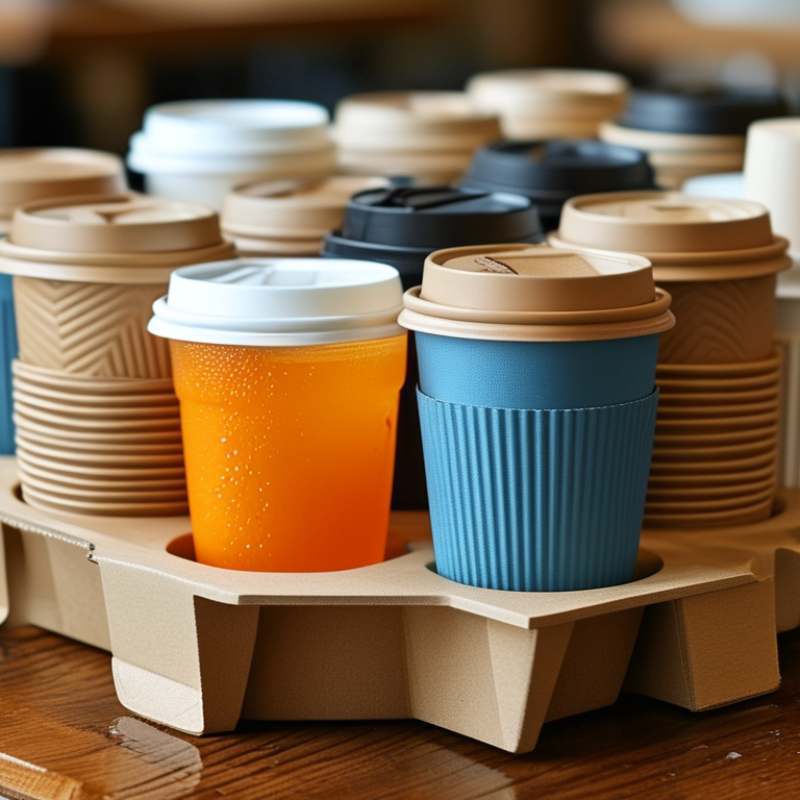
A disposable Drink Carrier is a single-use holder designed to transport several beverage cups safely. It keeps cups upright and separates them during walking, driving, or delivery. Most models use molded paperboard, recycled fiber, or lightweight plant-based materials. Their purpose is simple: reduce spills, protect hands, and make multiple drinks easier to carry. In a café, a worker can place filled cups into the carrier within seconds.
From practical food-service use, a reliable carrier needs balanced openings and a firm base. Each slot should hold a cup without squeezing it. Raised edges help prevent tipping when the carrier moves across a counter or vehicle seat. Some designs include finger spaces, which improve grip when drinks are hot. A carrier also supports faster service because staff can move several orders at once. Small details matter.
Still, disposable does not mean failure-proof. Wet paper can soften near a leaking lid. Overloaded carriers may bend without warning. That detail is easy to miss. Material selection also involves trade-offs. Recycled fiber can reduce the use of new resources, but moisture resistance may affect recycling in certain systems. Clear handling instructions could help users make better choices, although many carriers provide little guidance. Real performance depends on cup size, liquid weight, weather, and careful handling.
What Is a Disposable Drink Carrier? Common Materials Used in Disposable Drink Carriers
A 6 Drink Carrier usually uses molded fiber, paperboard, plastic, or plant-based fiber. Each material behaves differently during transport. Molded fiber feels firm and absorbs small spills. It often comes from recycled paper or pressed agricultural residue. Paperboard is lighter, cheaper, and easier to print. However, moisture can weaken untreated paperboard quickly. Plastic carriers, commonly made from PET or polypropylene, resist water and heavy cups. The OECD Global Plastics Outlook reported 353 million tonnes of plastic waste worldwide in 2019, with only 9% recycled. That figure makes material efficiency important.
Tips: Choose fiber carriers for short, dry journeys. Select coated paperboard when condensation is likely. Check whether the coating affects local recycling systems. A carrier that looks sustainable may still contain difficult-to-separate layers. The claim is not always obvious.
Bagasse and other agricultural-fiber carriers offer another option. They can use waste from sugar processing and provide a textured, natural appearance. Their performance depends on fiber density, moisture resistance, and production quality. The U.S. EPA’s 2018 Facts and Figures report recorded about 14.5 million tons of plastic containers and packaging in municipal waste. Paper-based formats can reduce plastic use, but they are not automatically harmless. Wet fibers may lose strength, while additives can complicate recovery. In practical testing, cup fit matters as much as material choice. An attractive carrier can still tip in a crowded delivery bag. That weakness deserves more attention.
A disposable Drink Carrier is a single-use holder designed to transport multiple cups safely. Common materials include paperboard, molded fiber, corrugated fiberboard, expanded polystyrene, and polypropylene.
How to read the chart: The chart compares typical material density ranges in grams per cubic centimeter. Lower-density materials are generally lighter, while higher-density materials are typically more compact. Actual values vary according to manufacturing methods, additives, moisture, and structure.
What Is a Disposable Drink Carrier?
Main Designs and Capacity Options
A disposable Drink Carrier is a molded or folded holder for transporting cups safely. It keeps lids level and reduces spills during short deliveries, office meetings, and takeaway service. Common materials include recycled paperboard, molded fiber, and lightweight coated pulp. Each material feels different in the hand.
The simplest design is a two-cup tray with circular openings and a low center bridge. It suits two standard hot or cold drinks. Four-cup carriers add a wider base and stronger side walls. They work well for family orders, though they need more storage space. Some six-cup versions use a grid structure. These are useful for catering, but their larger footprint can feel awkward in a small vehicle. Handle-style carriers provide a top grip and separate drink pockets. They are easier to carry with one hand, yet the handle may soften when exposed to condensation.
Capacity should match the cup diameter, height, and lid shape. A carrier that fits four narrow cups may fail with two wide iced drinks. Measure the opening, not only the stated capacity. A practical test uses filled cups, gentle walking, and a short counter lift. Check whether the base bends. It can. This small weakness is often missed. For hot beverages, deeper pockets and firm walls improve stability. For cold drinks, drainage space and moisture-resistant fiber matter more. Excess material may add cost and waste.
| Carrier Design | Typical Capacity | Common Material | Structural Features | Suitable Cup Types | Best For | Main Advantages | Typical Limitations |
|---|---|---|---|---|---|---|---|
| Two-Cup Beverage Carrier | 2 cups | Folded paperboard or molded fiber | Two circular cup openings with a central divider and a raised carrying handle | Hot coffee cups, cold drink cups, and standard takeaway cups | Individual orders and small beverage purchases | Compact, easy to carry, and uses less material than larger formats | Limited capacity; may be less stable with oversized cups or heavy toppings |
| Four-Cup Beverage Carrier | 4 cups | Molded paper fiber or coated paperboard | Four recessed cup wells arranged in a square, often with a center handle | Small to medium takeaway cups with compatible base diameters | Family orders, office deliveries, and café takeaway bundles | Provides a balanced layout and can transport several drinks at once | Takes up more storage space and requires matching cup dimensions |
| Six-Cup Beverage Carrier | 6 cups | Heavy-duty molded fiber or reinforced paperboard | Multiple cup wells with reinforced sidewalls and a central or side grip | Standard cold beverage cups and selected hot drink cups | Large group orders, catering, and delivery batches | High carrying capacity and improved separation between individual drinks | Heavier when fully loaded and more difficult to maneuver in one hand |
| Open-Top Tray Carrier | 2–6 cups | Paperboard, molded fiber, or recycled pulp | Flat tray base with molded or die-cut cup recesses; usually no full enclosure | Cold drink cups, takeaway coffee cups, and mixed beverage sizes | Counter service, short-distance transport, and food-and-drink combinations | Fast loading, easy customer access, and convenient stacking when empty | Less protection from side impact or splashing than enclosed designs |
| Interlocking Folded Carrier | 2–4 cups | Die-cut paperboard or corrugated paperboard | Folded panels lock together to form cup compartments and a carrying handle | Common disposable cup sizes with relatively stable bases | Takeaway service where flat storage and quick assembly are important | Ships and stores flat, requires no separate assembly tools, and is lightweight | Assembly accuracy affects stability; moisture can weaken untreated paperboard |
| Enclosed Beverage Box | 2–4 cups | Corrugated paperboard or coated paperboard | Partially or fully enclosed walls with a top handle and internal dividers | Hot drinks, cold drinks, and mixed beverage orders | Delivery services and orders requiring additional spill protection | Improves protection during transport and can hold small food items in some layouts | Uses more material and may require more assembly than an open carrier |
| Molded Fiber Cup Holder Insert | 2–6 cups | Molded recycled paper fiber or molded pulp | Rigid molded wells that support the cup base and separate neighboring drinks | Cold cups, paper hot cups, and selected reusable-style takeaway cups | Delivery bags, cartons, and packaging systems needing internal stabilization | Good resistance to compression, renewable fiber content, and secure cup separation | Not every insert fits every cup diameter; fiber performance depends on moisture exposure |
| Cup-and-Food Combination Carrier | 1–2 cups plus food compartment | Paperboard, corrugated paperboard, or molded fiber | Integrated cup openings beside a compartment for snacks, pastries, or small meals | Standard takeaway cups paired with compact food containers | Breakfast sets, snack orders, and compact takeaway meals | Combines food and beverages in one unit and can reduce the number of separate packages | Food weight can affect balance; capacity is lower than dedicated multi-cup carriers |
A disposable Drink Carrier is a single-use holder that keeps cups stable during transport. A4 Cup Drink Carrier usually uses molded fiber or coated paperboard. Its openings grip the cup shoulders, while the center bridge prevents contact and tipping.
Manufacturing starts with recycled paper fibers, water, and controlled additives. The mixture is screened to remove dust, plastics, and oversized fibers. It then enters a molded-pulp tool under vacuum. The tool shapes four cup wells and small support ribs. Wet pressing removes water and improves edge definition. Heated molds finish the drying stage. Some factories use paperboard sheets instead. They die-cut, crease, fold, and glue each carrier.
The details matter. A cup opening that is only one millimeter too wide may feel loose. Excess moisture can weaken the carrier during delivery. Quality teams test compression, moisture resistance, stacking height, and cup retention. This process still has imperfections. Fiber thickness can vary across one batch. Operators must adjust pressure and drying time.
FAO’s Forest Products Statistics reported global paper and paperboard production at roughly 417 million tonnes in 2022. That scale supports broad fiber availability, but it also increases resource pressure. Eurostat reported an EU paper and cardboard packaging recycling rate of about 82% in 2022. Actual recovery depends on clean collection and local sorting systems. Smithers’ Paper Packaging outlook also identifies fiber efficiency and recyclable design as major manufacturing priorities. A practical carrier should use enough material for strength, not simply the maximum amount.
A disposable drink carrier holds two or more cups during takeaway service. It is often made from molded paper fiber, recycled paperboard, or lightweight plastic. The common Drink Holder Carrier fits beneath cup rims and separates drinks during movement. A server can place it inside a delivery bag, on a counter, or beside a drive-through window. Small details matter. Deep wells reduce sliding, while raised edges help protect fingers from warm beverages.
Food service operators use carriers for coffee runs, catering orders, office deliveries, and family meals. The National Restaurant Association’s 2024 State of the Restaurant Industry report projected U.S. restaurant sales above 1 trillion dollars. That scale increases demand for practical off-premises packaging. Carriers also help customers transport several drinks without balancing separate cups. Still, they are not perfect. Wet fiber may soften, and narrow handles can feel unstable with heavy drinks.
Material selection deserves careful attention. The U.S. Environmental Protection Agency reported 67.4 million tons of paper and paperboard containers and packaging in its 2018 municipal waste dataset. About 46.8 million tons were recycled. Those figures support recyclable designs, but local collection systems differ. A carrier should match the drink size, lid shape, and expected travel time. A short walk is different from a long car journey. Reusable trays may work better for frequent household use, while disposable options suit busy events, temporary stalls, and takeaway counters.
What Is a Disposable Drink Carrier?
Environmental Impact and Disposal Considerations
A disposable drink carrier supports several cups during takeaway service. It may use molded paper fiber, cardboard, or plastic. Its environmental cost depends on material, manufacturing energy, transport, and disposal conditions.
The United States Environmental Protection Agency reported that containers and packaging generated 82.2 million tons of municipal solid waste in 2018. That represented 28.1% of total waste generation. A drink carrier is only a small part of this stream. Its footprint still grows through repeated daily use. Molded fiber can be recyclable or compostable in theory. However, wet fibers, spilled beverages, and food residue often reduce recovery quality. That assumption fails.
Plastic carriers may be lightweight and durable. Yet the OECD reported that only 9% of global plastic waste was recycled in 2019. Most plastic waste was landfilled, burned, or leaked into the environment. UNEP also estimated that plastic pollution could be reduced by 80% by 2040 through reuse, better design, and improved waste systems. Disposal remains highly local. A carrier marked “compostable” may require commercial composting facilities, not a household compost bin.
Check the carrier’s material and local collection rules. Keep it clean and dry when possible. Do not place fiber carriers in recycling bins with visible liquid or grease. Small details matter. The uncomfortable truth is that labels can sound more responsible than the infrastructure supporting them. Better design helps, but correct disposal still depends on human behavior and available facilities.
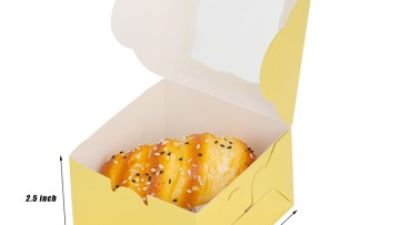
Recent packaging market research highlights a growing preference for sustainable materials, practical design, and attractive product visibility in the bakery sector. Wholesale kraft ivory cake boxes with windows respond to these trends by combining sturdy construction with an easy view of the pastry inside. Made from high-quality kraft paper or white cardboard, these disposable boxes offer a more environmentally conscious option for bakeries, pastry shops, and food-service wholesalers seeking dependable packaging.
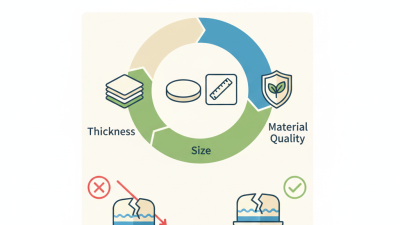
Supplied directly from a China-based factory, the boxes are available in a standard 4 × 4 × 2.5-inch format, with customization for different pastry sizes and presentation needs. Buyers can select gold, white, black, pink, or brown finishes, while round, rectangular, square, hexagonal, and heart-shaped designs support a wide range of cake styles. Thickness options from 1/4 inch to 1/2 inch provide flexibility for lightweight desserts, layered cakes, and heavier pastries.
The transparent window helps customers inspect decorations without opening the package, supporting a clean and convenient purchasing experience. Custom printing, colors, dimensions, and structural details can also be developed to match a bakery’s visual identity. These kraft ivory cake boxes are suitable for wholesale orders, seasonal collections, takeaway service, gift packaging, and everyday pastry display.
: Common materials include molded fiber, paperboard, plastic, and agricultural fibers. Each material handles moisture and weight differently.
Molded fiber works well for short, mostly dry journeys. It feels firm and can absorb small spills. Wet fiber weakens quickly.
Paperboard is light, affordable, and easy to print. However, untreated paperboard can soften under condensation. A cold cup may leave a wet ring.
Plastic carriers usually resist water and heavier cups. They may also survive crowded delivery bags better. Their disposal impact remains difficult.
No. Plant fibers can reduce plastic use, but they are not harmless automatically. Their impact depends on production, additives, moisture resistance, and disposal. The label may oversimplify things.
Cup fit matters as much as the material. Loose openings can make cups lean or tip. A beautiful carrier can still fail inside a moving delivery bag.
Some fiber carriers may be recyclable or compostable. Liquid, grease, and food residue can reduce recovery quality. “Compostable” may require a commercial facility.
Check local collection rules before choosing a bin. Keep the carrier clean and dry when possible. Do not recycle visibly wet or greasy fiber.
Coated paperboard or water-resistant materials may handle condensation better. Still, check whether the coating affects local recycling. The answer is not always obvious.
Use only the strength and size that the order needs. Avoid oversized carriers and unnecessary layers. Better design helps, but disposal systems still matter.
A Disposable Drink Carrier is a single-use holder designed to transport cups safely and conveniently, helping reduce spills during takeout, delivery, events, and everyday travel. It is commonly made from molded paper fiber, recycled cardboard, coated paperboard, or lightweight plastic, depending on the required strength, moisture resistance, and cost. Designs may include single-cup holders, multi-cup trays, and carriers with handles or locking features. Capacity options vary to suit different cup sizes and service needs.
Manufacturing typically involves cutting, folding, pressing, or molding the chosen material into a stable shape, followed by quality checks for strength and fit. Disposable Drink Carriers are widely used by food-service businesses, offices, schools, gatherings, and consumers carrying beverages on the go. Their environmental impact depends on the material, production process, and disposal method. Paper-based carriers may be recyclable or compostable where facilities exist, while plastic versions require appropriate recycling systems. Consumers should follow local waste-sorting guidance and avoid littering.